Hyakushou Kizoku S3 – 7-9
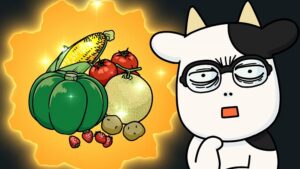
Wooper: Last month I speculated about the possibility of Hyakushou Kizoku running out of material, since new chapters are published only sporadically, but the strength of these episodes makes me think I needn’t have worried. The first of the three was good for a couple laughs, as Hiromu Arakawa’s bovine avatar grinded her teeth about the frequency of agricultural theft, but things really ramped up in episode 8 (36 overall), where she dove into farm romance. The script’s list of increasingly strange but still plausible quirks at farmer’s weddings had me smiling the whole way through, from rushing to finish daily chores just hours before the ceremony to a bouquet toss featuring vegetables rather than flowers. There was also a shoujo manga parody toward the start that I thought might extend beyond the title card, Hoshiiro Girldrop style – and speaking of parodies, Initial D got a pair of references in episode 9, which was about road blockages, of all things. There were obvious ones like herds of escaped cattle, of course, but some accidents also had knock-on effects, such as an overturned manure spreader resulting in obstructive overgrowth a year after the fact. No matter how tight your turn radius, you can’t beat the combination of Mother Nature and fertilizer!
Star Wars Visions S3 – 4-6
That’s more like it. Two of these three episodes were winners, in my estimation, though the one I liked the most (number 5, “Yuko’s Treasure”) probably didn’t appeal much to real Star Wars heads. Its youthful visual style gave it a sense of whimsy that helped offset the light horror of its story, about a young orphan targeted by pirates for his departed parents’ wealth. Eventually the plot took us underground, where a sixteen-legged cave monster might have scared the shit out of any children in the audience, if not for the kid-friendliness of the short’s design work. Though the improbability of the ending held Yuko’s episode back from greatness, its solid animation, cool use of sand speeders, and adventurous soundtrack (love me some dulcimer) made it my favorite of the season so far.
Like Yuko’s Treasure, “The Lost Ones” was also by Kinema Citrus, being a sequel to their entry from the first volume. I remember liking that episode (titled “The Village Bride”), but this new one felt more like a midseason finale rather than a direct continuation, diving into the protagonist’s relationship with her Jedi-turned-Sith master and inventing a whole cast of characters that had nothing to do with the first installment. They were environmentalists working to prevent carbonite leakages on planets ravaged by the Empire’s mining operation, which is a great concept, but their link to the main character ran deeper than we were permitted to see given the short runtime. Still, there were highlights here, especially the meticulously-drawn lightsaber fight between the heroine and the hair-raising use of a Gregorian chorus.
“The Bounty Hunters” (number 4) was my least favorite, despite its solid production. The lighting was nicely handled during all phases of the day, and if my eyes didn’t deceive me, it used traditional animation even for a massive destroyer droid that easily could have been rendered with 3DCG. The writing was dull, though, centering on a bounty hunter named Sevn with a heart of gold who predictably betrayed her client, an evil CEO who was secretly off his rocker. As an orphan, Sevn was sure to double cross her boss as soon as she saw a hologram recording of a once-happy family torn apart by his taste for child slaves. No shade on anybody who preferred this one over the others, but when it comes to anime anthologies, I’m looking for something a little more removed from the beaten path.
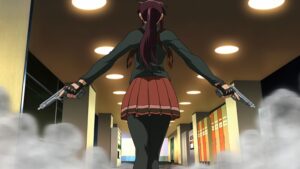
Ganglion – 7-9
After the cliffhanger from episode 6, where Isobe showed up at the apartment of the invincible Hopeman, I figured he would ask his enemy to take the fall so he could impress his son for a change. Instead, the reason for his visit was incidental to the show’s true purpose in arranging it: to reveal that his sister-in-law had shacked up with Hopeman. The resulting reversal in their dynamic was amusing, but it also had some bite to it – the two men tried to hash things out over some beers at the series’ usual oden stand, but Isobe’s professional resentment of his younger adversary soured the attempt. I got the sense that, regardless of who wears the hero’s mask, Isobe’s dissatisfaction with his job itself is the real root of his bitterness. This was sort of confirmed in episode 9, where he internally wished death on his hypochondriac boss during another of their organization’s schemes, and later flung himself fruitlessly into battle with Hopeman yet again, even after his prospective brother-in-law offered to call off their duel. Sometimes people embroil themselves in the worst aspects of a job they hate because they feel they shouldn’t leave – if Ganglion has any broader message, it may be to avoid that line of thinking (we’ll see whether I’m entirely off the mark once the last three episodes roll around).
Fujimoto Tatsuki 17-26 – 4-6
The first of these three episodes, “Shikaku,” was a delirious dive into our desire for novelty, centering on an assassin whose antics amused her employer-slash-target (Yugeru) so much that he renounced his death wish and dedicated his life to her. Despite the construction of that sentence, it’s the eponymous assassin who was initially struck with Cupid’s arrow, and the episode really laid it on thick in one fanservice-heavy scene that Makima fans are sure to enjoy, as Shikaku is her spitting image. One of the things I liked most about this episode was its use of vampire tropes (the aforementioned employer was just such a ghoul) not for aesthetics, but to shape the characters’ motivations. Due to Yugeru’s millennia-long life, he unconsciously yearned for new experiences, and Shikaku was so far off her rocker that she provided just that. Underneath the gore and (mild) sexuality, there was something universal here that a lot of anime with antisocial characters fail to communicate.
Episode 5 pivoted from vampires to mermaids, but it fell into the trap I referenced just above, playing up the look of its mythical creatures and telling a far more superficial tale about their non-human traits. Its primary goal seemed to be to showcase the mermaids’ cuteness, giving them sailor suits and the sort of wide-eyed mannerisms typical of anime love interests. The story revolved around a neglected teenage boy whose half-mermaid parentage allowed him to play an underwater piano for extended periods of time, but the music he produced was ultimately just a tool for the script to surround him with fish-tailed admirers. Despite plenty of opportunities to showcase sea life and scenery, “Mermaid Rhapsody” was merely comparable to a competently produced TV episode, which is especially glum news given that this director/studio combo also handled episode 7 (which I’ll review in a couple weeks). Hopefully this one will be the anthology’s low point, rather than their other entry.
“Woke Up as a Girl Syndrome” was 17-26’s shortest installment yet, but it used its time effectively, packing its storyboard full of quirks like living PA system speakers, lips with a literal zipper attached, and a bullying scene where the tormentors’ faces were gradually drawn onto a CD (which led straight into a facetiously upbeat needle drop). These and other such bits of flair made the episode’s premise less strange by contrast, and gave it an energy that helped carry it through some of its more awkward moments (including a bit of sexual aggression that fizzled out almost as soon as it began). The plot was of course shaped by questions about the protagonist’s sexual and gender identity, but it also focused on the reactions of two other characters close to him, including his girlfriend, which I thought tied the whole thing together despite the 11 minute run time. Great use of color, too, which I’m too green to even begin unpacking (see what I did there?).
Pokemon Concierge – 7
With the introduction of a new employee in the previous episode, Concierge used this follow-up as an opportunity to let Haru play the role of senpai for a change. Her usual nerves and lack of confidence got the better of her, especially in comparison to Dan, her older kouhai, who always seemed to know what to do without being told. This kind of story likely resonated best within cultures like Japan’s, which are built around seniority – personally, I had a tougher time connecting with it, especially since some of Haru’s “mistakes” weren’t her fault to begin with. She seemed overly concerned with her appearance during the training process, so it wasn’t until a bit of Pokemon playtime in the third act that she was able to shed her self-consciousness and work with Dan as equals. On another note, one of the conflicts that arose here was a literal one involving two Metagross that were seconds away from squaring off. I don’t remember much from Concierge’s first four-episode season, but had the two titans come to blows, it might have marked the series’ first real battle. It’s no wonder the script broke up their fight before it could begin – it probably would have taken days to animate in stop motion!
The post Fall 2025 Check-In – Weeks 9-10 appeared first on Star Crossed Anime.