Hello folks, and welcome back to Wrong Every Time. It’s been an anxious yet oddly encouraging week on the world stage, as our mad king’s ravings appear to have inspired resistance from both the brave people of Minnesota and from Europe at large. It’s been decades since the demonic Karl Rove declared us to be living in the “post-truth” era, and it seems like for Trump’s true supporters, there is no longer any possibility of drawing them back to reality. What comes next will either be an empire’s death rattle or the total deconstruction of the American right; anything short of the second will surely only hasten the first.
Apocalyptic tidings aside, my house has continued with its usual screenings, as we munched through the first half of Dragon Ball Daima and checked out some films on the side. Daima’s been fun on the whole; it’s largely holding true to a more original Dragon Ball-like tone, though I’m a little disappointed it’s so swiftly returned to the Super Saiyan-level combat that basically outscales any sort of cunning or choreography. As for the films, well, that’s what we’re here for – let’s break ‘em down in the Week in Review!
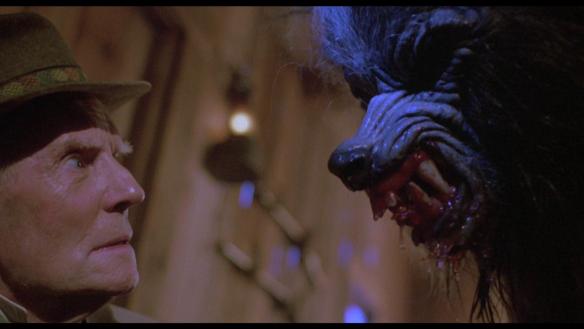
First up this week was Waxwork, an ‘88 horror-comedy centered on a small suburb, wherein an old-fashioned waxwork museum has just mysteriously popped into being. Undeterred by the building’s inexplicable appearance or unusual promise of a “midnight private viewing,” a bunch of local teens take the proprietor up on his offer. Unfortunately, it turns out that each of the waxworks on display is actually a portal to the monstrous scene being depicted, and moreover that blessing each of these waxworks with a new victim will swiftly prompt the “voodoo end of the world,” as the eighteen most evil beings in history are resurrected in the form of wax monsters.
“Horror-comedy” might be the most inherently compromised subgenre in film, but there are still a few treasures to be found among its dubious, often cloyingly self-aware offerings. And fortunately, Waxwork seems well aware of the field’s most common stumbling block: you have to actually make a horror movie. Thus, alongside its frequently flat jokes and one-note characters, Waxwork graciously offers an ample selection of cheesy period kills within the context of its portal-laden waxworks. The film at times can feel almost like a Troma production in its mixture of hammy comedy and gratuitous violence, but the lovingly constructed film-in-film sequences and explosive, absurdist finale can’t help but leave a positive impression. If you love B-horror with a lot of heart, you’ll have a fine time with Waxwork.
We then checked out likely the biggest film of last year, Paul Thomas Anderson’s One Battle After Another. Leonardo DiCaprio stars as Bob Ferguson, living off the grid and under an assumed name owing to his history of association with the revolutionary French 75. When he and his daughter Willa (Chase Infiniti) come under fire from a vengeful colonel (Sean Penn), he is forced to stretch his weed-addled brain and tenuous revolutionary connections to save her.
One Battle After Another is a furious, desperate tinderbox of a film, hungry for justice and sustained by a thinly stretched framework of human solidarity. While I felt the origin sequence of the French 75 leaned a bit too far into farce or pastiche, once the film settles into the core conflicts of Bob and Willa, every scene smolders and pops like a chain of firecrackers, propelled by Leo’s manic desperation and Anderson’s gripping man-on-the-street cinematography.
The film’s imagery pointedly calls to mind both the 2020 Black Lives Matter protests and the heinous atrocities we see committed by ICE and border patrol agents today, but its core is intimate and human – a man trying to save his daughter, a girl trying to discover her mother, and all the forces of modern injustice arrayed against them. Performances are terrific across the board; Leo breathes such life into the poignant ruin of Bob, Benicio del Toro brings a whimsical lightness to his every appearance, Chase Infiniti is an absurdly composed newcomer who’s already learned to convey volumes with a twitch of the eye, and Sean Penn is the most grotesque creature I’ve seen in years. It’s almost hard to laugh at the juvenile farce of the villainous Christmas Adventurers, given our own not-so-secret overlords act with equally garish self-importance. This film feels like the Parasite of our moment; a document of precisely where we are at culturally, cataloguing both the face of the enemy and the fatigue of living under their heel.
We then continued our journey through the sprawling Godzilla canon with Godzilla vs Destoroyah, a ‘95 production that serves as the final entry in Godzilla’s Heisei era. Godzilla’s in a bad way in this one, as his nuclear reactor heart seems on the verge of meltdown. This causes him no small degree of consternation as he is additionally forced to contend with Destoroyah, a new monster that us stupid fucking humans cooked up by meddling with the mechanics of the very first film’s Oxygen Destroyer.
Far more so than the conclusion of Godzilla’s first era, Godzilla vs Destoroyah feels like a genuine final chapter, evoking a nostalgic, elegiac tone as it considers the franchise’s origins while charting a new future. Destoroyah exists in direct conversation with the original film, interrogating its lessons more fully than either of the original’s direct sequels, and finding humanity’s response tragically wanting. In order to destroy the very monster they created, humanity must rely on freshly invented monsters, with the same results as the first time. The whole affair reminds me of a telling exchange from an earlier Godzilla, wherein the elder statesman reluctantly admitted that this new era belongs to the next generation, to which his protege replies “if we make the same mistakes, can we really call it a new era at all?”
Destoroyah’s concerns make for a more subdued, melancholy tone than the Godzilla standard, which feels appropriate for the conclusion of its generally weightier second era. Though there are fun setpieces scattered throughout (I particularly liked the use of Destoroyah’s man-sized predecessors for a clearly Aliens-indebted sequence), the film’s last image is of Godzilla stomping painfully through the wreckage of one more city, even his one-time expressions of power and freedom now a painful burden. Even if we humans can’t get it right the next time, hopefully the next Godzilla will.
Alongside our film screenings, we also checked out the recent Netflix miniseries Last Samurai Standing. Set during the transformative days of the Meiji era, the series stars Junichi Okada as a former samurai, now destitute and desperate to save his family as the age of the sword comes to a close. Alongside three hundred fellow warriors, he sees salvation in the promise of the “Kodoku,” a tournament where samurai must kill each other for tags that will allow them to pass a sequence of checkpoints leading to Tokyo. But of course, the creators of this tournament have their own intentions, and not every warrior is there just for the money.
So yeah, this production offers pretty much exactly what it promises, playing much like a live action anime adaptation in the process. While the script is a little thin, the adaptation elevates the concept significantly, particularly through the combination of director Michihito Fujii’s shooting and Okada’s dynamite fight choreography. The action choreography throughout is frankly stunning, ranging from preposterously ambitious long cuts staged with hundreds of simultaneous fighters to tight, delicate duels exploiting a variety of distinct battlefields. “The Raid with swords” is not far off; if you’ve any interest in fight choreography, Last Samurai Standing is a must-see.