Hello folks, and welcome back to Wrong Every Time. Today we’re embarking on a somewhat unusual journey, as we dawdle our way through the 2024 film Wicked, adapted from the 2003 stage musical of the same name, which was itself adapted from Gregory Maguire’s 1995 novel. I’ve never seen the play or read the novel, but from what I understand, it catalogues the younger days of The Wizard of Oz’s Wicked Witch of the West, extrapolating an era spent at some sort of magical academy alongside Glinda the Good Witch.
Directed by John M. Chu (Crazy Rich Asians), the film stars Cynthia Erivo as our wicked witch Elphaba, and musical star Ariana Grande as the good witch Glinda. And that’s… basically everything I know about this film, beyond some general critical consternation regarding its staging and color design. I am a fan of musical theater, but I often find actual musicals to be a bit broad in their writing, rather than the incisive narrative song-cycles you can find on a good concept album. Either way, I’m eager to patch up this clear gap in my cultural knowledge, so let’s get on with the show!
Wicked
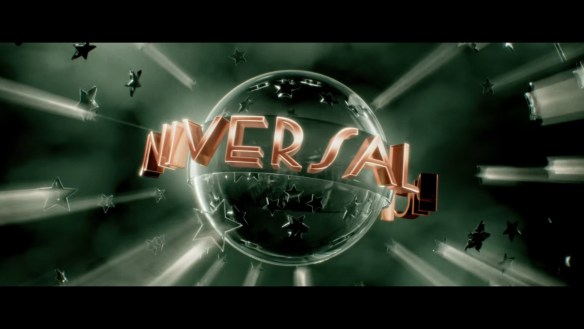
Well, we’ve cleared the first hurdle: they did indeed alter the Universal logo to fit the Wizard of Oz’s style. An important first choice!
We open with a voiceover asking “Glinda, exactly how dead is she?”, before our presumed Glinda promises over a crackling microphone to “tell the whole story.” I like how they’re leaning not just into the Wizard of Oz’s internal worldbuilding, but also the 1940s-era “modern technology” of our own world surrounding it
Yep, we’re right at the end of The Wizard of Oz. We pan up across the wicked witch’s hat and out through the window, following some flying monkeys up over a waterfall and onward to a view of the Emerald City. This film clearly doesn’t work without having at least seen the Wizard of Oz itself!
We actually see Dorothy and her companions walking along the yellow brick road, which seems… temporally impossible? We’re past the death of the wicked witch, she should have long since arrived at the Emerald City. Does that rider emerging from the wicked witch’s castle imply some other timeline being presented here, or is this just more a way of playing the original film’s visual hits as quickly as possible?
I actually like the color design so far – the hues feel inherently faded, like there’s a touch of sepia filter over them, which evokes the sense of a faraway or long-ago story
I see we’ve tackled the inherently problematic “munchkinland” by just sizing up all the buildings relative to their occupants, and also leaning heavily on child actors
“Let us rejoicify that goodness could subdue.” Glinda certainly has a way with words
Grande really can hit those insane high notes. An excellent choice for a character who seems to intentionally evoke pompous self-righteousness through her singing
“No one mourns the Wicked.” So it seems we’re clearly digging into how complicated histories are often sanitized by the official historical record. Good always prevails, because whoever wins naturally believes they are good
They’re certainly having fun with these little propaganda posters. “Protect Yourself: Water Melts Her!”
“Are people born Wicked? Or do they have Wickedness thrust upon them?”
We then cut back to the Wicked Witch’s origins. Apparently her father was appointed governor of Munchkinland
The witch was actually born of an affair between her mother and some stranger, who the camera pointedly avoids revealing directly
She was born naturally green and with tremendous magical power, earning her the immediate scorn of her parents. Thus she was raised by her nanny Dulcibear
I guess this universe just sorta extrapolates from the Cowardly Lion that all animals are sentient and capable of speech? It’s an odd thing, attempting to create a full universe out of a story whose details are so precisely attuned to the specific narrative being constructed; I don’t imagine there’s an entire nation of Tin Men, there’s just the Tin Man, a guy that Dorothy meets. Feels like a somewhat awkward collision of the original narrative’s whimsical magical realism and our current preference for fully articulated fantasy worlds
The witch’s interactions with her younger sister Nessarose offer a chance for some incidental exposition regarding the Wizard of Oz’s own story. Though again, this would be a very strange way to be introduced to Oz in general, considering how much this film is already leaning on built-in fondness for the original tale’s beats
Her name is Elphaba Thropp. And yep, the other kids bullied her as much as her own parents
We cut back to Glinda in the present time, now presiding over a Wicker Man-style witch burning. Dunno about this munchkin village
Glinda mentions the wizard’s “unexpected departure,” once again placing us within the theoretical timeline of the original tale
We then jump back to Glinda’s arrival at school. So is it the going to school that makes one a witch, or natural aptitude? And how slowly do witches age? Apparently very slowly, if these school days were able to fade into modern legend while Glinda remained the same
The film’s choices of costuming are interesting. Everyone’s color-coded in some way, which I suppose echoes the decor of the Emerald City in the original film, but it feels a bit strange when applied to an entire living community like this. Once again, it seems hard to extrapolate on a story originally envisioned as a fantastical fairy tale, and try to make that story the bedrock of an actual living universe
Then again, all of their outfits are spotless, literally like stage costumes, which again emphasizes the unreality of the world they inhabit. Definitely a sort of “having your cake and eating it too” situation in terms of what genre we’re trying to inhabit here
Glinda meets Boq, a fellow student from Munchkinland
Between her full barge of luggage and immediate mispronunciation of Boq’s name, we’re clearly establishing her as a self-important child of high society
I wonder how much relations of class or race are actually going to be interrogated by this narrative? On the one hand, Elphaba’s story is clearly about an “outsider” relative to societal expectations, with her greenness serving as a fantastical stand-in for any conventional source of prejudice. Additionally, Munchkinland is clearly being characterized as a provincial, “low society” community. On the other hand, Elphaba’s condition is so singular that it seems hard to extrapolate much from it beyond “don’t be mean to people unlike you,” and it’s hard to say so far if there’s much institutional prejudice towards actual groups of people here. It feels a little strange that the father who condemned his first daughter for being green would embrace his wheelchair-bound second daughter with open arms – is Elphaba just the singular outlier in a post-prejudicial universe?
“Strangers are just people I’ve never met.” Glinda is already using her lofty yet empty rhetoric as a weapon, keeping people at arm’s length with friendly platitudes
Their academy is named Shiz, apparently
“And yes, I’ve always been green.” Elphaba has learned to take all this nonsense in stride
“If at some point, you wanted to address the… problem.” While of course, Glinda sees her nature as a problem to be fixed
“She’s so good!” Obviously this whole performance is really meant for the crowd, not for Elphaba, as Elphaba herself swiftly points out
Ah, I see. Elphaba’s actually here accompanying Nessarose to her first day at school
“Don’t help me.” A clear point of connection between the sisters, neither of whom see their conditions as detrimental handicaps
I do like the flourishes of incidental worldbuilding like these bell-playing hummingbirds. Extrapolating original ideas from the source material seems like a better choice than retreading the hits
Our Dean of Sorcerer Studies is Madame Morrible, played by Michelle Yeoh
“I am Galinda Upland, of the Upper Uplands.” Once again we’re gesturing towards class, but mostly in a high school “my dad owns a dealership” sort of way
As the aptly named Ms. Coddle attempts to steer Nessarose, Elphaba instinctively uses her powers. Her erratic power sorta reminds me of The Nine Lives of Christopher Chant, once of Diana Wynne Jones’ Chrestomanci novels. If you’re looking for great youth fantasy in this boarding school drama-adjacent space, that one and Charmed Life are essential picks
Interestingly, the Wizard of Oz-centered frontispiece is actually covering an older painting depicting sentient animal scholars. So are humans in general a sort of colonial power here?
Seeing her insane magical potential, Morrible covers for her, after which Galinda accidentally offers to share her suite with the new student
Galinda is clearly not enjoying her first taste of someone else being favored for their inherent nature over her
“Something is very wrong. I didn’t get my way.”
Apparently actual magic is extraordinarily rare in their world; it seems it’s been years since Morrible had a student with any aptitude
“Do you think the Wizard is dumb? Or like Munchkins, so small-minded?” Unfortunately, power and prejudice are fairly consistent bedfellows
This song does serve as a nice dramatic parallel of the original story, which also centered on pinning far too lofty hopes on an ultimately small and ordinary man
In her heart of hearts, Elphaba also wishes the Wizard would simply snap his fingers and de-greenify her
Jeff Goldblum jumpscare as we see the Wizard carved in rock
“Someday there’ll be a celebration throughout Oz, all to do with me.” Oof
Galinda has of course already apportioned 98% of the suite for her own luggage
Fun quirk of adaptation, having them actually dictate their letters home out loud rather than just in internal monologue. Overt monologuing of internal feelings is basically a necessary concession of theatrical performance, one so ingrained in the art form that the idea of characters responding to each other’s “inner thoughts” is similarly accepted as medium-mundane. Of course, when you transition to a medium that actually allows for internal voiceover, that tradition comes off as a little strange
“I’ll be loathing you my whole life long.” This is definitely the strongest song so far, though I’m not as attached to our leads as I’d like, most likely because their conversations so far have just sorta been establishing their narrative functions
That does tend to be an odd quirk of the musical as a narrative form, though – dramatic transitions are sung through, not necessarily earned through character rapport
“Well, it seems the artichoke is steamed.” Galinda actually does get more likable the more she shows her teeth. That seems to be a source of mutual development for the two – their hatred of each other is helping them embrace their honest emotions
“There have been some great changes throughout Oz with the rejection of animal culture.” Oh damn, I guess we’re getting into it!
Their goat teacher speaks of a Great Drought in the past, which resulted in the apparent persecution of Oz’s animal races. Will this somehow tether in with Elphaba’s weakness to water?
And apparently this prejudice carries through to the modern day, as we see someone has painted “animals should be seen and not heard” on Dinklage-goat’s blackboard
During their own private studies, Morrible actually provokes Elphaba to anger in order to conjure her talent. “Magic invoked by outbursts of emotion” has a long and storied fictional history; hell, I’m actually employing a variation of it myself for the novel I’m currently working on. It’s natural to frame magic as an expression of our will made manifest, and thus moments of greatest willful desire – anger, fear, love – are often framed as what unlock our powers. Even Goku works that way
Elphaba follows Dr. Dillamond (Dinklage-goat) back to his quarters, and overhears a meeting of the worried animal instructors. Whoof, this song is not a good one
A classic story – as humanity claims the land, the magic steadily seeps out of it. You can frame this as a consequence of mankind’s generally mundane, nearsighted nature (like in Lord of the Rings), or for fairy tales, more as the diminishing of a child’s capacity to pretend (like in Peter Pan)
Elphaba is practically run over by a young man in the forest on her way back to school. He appears to be the first person her age who isn’t put off by her color
He’s apparently Prince Fiyero Tigelaar, as the school announcer breathlessly informs us
Fun beat of him and his horse possessing the same royal posture
Also Ariana’s insane hair flips are always fun. I’ve never really listened to her music, but she’s putting in a wonderfully self-effacing performance here
“And this is, um, the book place. There’s a collection of some rare books around here… and some medium rare books as well.” An excellent stupid gag. Really an art to them
“Stop studying strife and learn to live.” The prince’s party-boy ethos seems to echo Galinda’s aggressive disinterest in learning history. A theme might be developing here regarding the consequences of only looking at that which is beautiful to you, which has disastrous consequences on both the personal and cultural level
“Life is more painless for the brainless.” Undeniably true
Damn, they’re really making the most out of this absurd spinning library setpiece. The film’s lighting isn’t really doing its lavish set design any favors (everything just looks sorta washed out in the overwhelming glow), but those sets are lavish
Galinda deflects Boq’s invitation to the dance by redirecting him towards Nessa
“Now that we’ve met one another, it’s clear we deserve each other.” An excellent opening line for the duet of these two pricks
The lighting really is quite bad here – the pair of them are so blown out by the backlighting that you can barely see their faces. And the fact that everything looks so washed out feels particularly egregious for a Wizard of Oz-derivative production, considering one of the original film’s main appeals was its glorious, vibrant color design
Apparently the Wicked Witch’s hat was actually Galinda’s originally, a gift from her grandmother. I’m generally not a fan of this sort of… circular ancillary worldbuilding, you might call it? Basically, when an “origin story” explains all of the incidental details of the original narrative, it actually makes the world feel smaller – like everything important that ever happened to its characters occurred within the several month span illustrated by the origin story. Great fantastical tales possess numerous dangling ends that invite speculation, and those are not “plot holes” to be filled in – they are ambiguities that convey a richness of texture, an implication that this world possesses far more secrets than can be detailed in any one person’s story. When Rutger Hauer says “I’ve watched C-beams glitter in the dark, near the Tannhauser gate,” that phrase is evocative and compelling precisely because we don’t have context for it, and never will
Then we’re off to the Ozdust dance hall. This film’s set design is an interesting compromise – they’ve built a variety of lavish sets, yet rather than attempting to convey a living world, they sort of lean into the unreality of the stage, clearly existing for group dances more than everyday occupation. I suppose that’s really the only way you can conserve the grand drama of a musical in adaptation, though I’ve certainly seen plenty of Bollywood films that split the difference in other ways, making music videos in whatever natural environments the characters find themselves
“Nessa, I’ve got something to confess-a.” No, illegal, unacceptable rhyme
In gratitude for the “gift” of the witch hat, Elphaba gets Galinda enrolled in the private sorcery seminars. Nothing like a heaping helping of guilt to clear the air between rivals!
Once again, the lighting sorta undercuts Elphaba’s entrance, obscuring her beneath an underwhelming overhead light. No need to keep harping on it at this point, but yeah, cinematography and lighting are not this production’s strengths
Love her lonely solo dance, though. Dance is really a miraculous art form; one of those disciplines like music, that can convey emotion on a more primal level than words allow
And at last, Galinda reaches out to her in turn. Excellent choice to leave this entirely to our leads – just a light piano in the background as they connect without ego or pretense
The other students begin to join in the dance, further bolstering that core theme of embracing that which is strange or foreign to you, and finding in it a beauty you couldn’t have imagined. Of course, most people need a comforting guide like Galinda, someone they trust to help them take the plunge into the unknown
“Fiyero and I are getting married.” “He asked you already?” “Oh, he doesn’t know yet.” Galinda is a lot of fun
Also an incredible move of huff-stomping across the room and then just falling dead on her bed. I was worried Grande wouldn’t be able to hold up the dramatic moments as well as the musical ones, but she’s actually great – frankly, the bigger issue so far is the prestigious traditional actors having trouble with the songs
Elphaba reveals that her sister’s condition and mother’s death both stem from her father’s attempts to ensure Nessa wouldn’t be born green. Elphaba blames herself, of course, though Galinda urges her not to. An excellent beat for both of them, with Galinda’s self-assurance for once leading her to offer good advice
Thus we reach “Popular,” one of the few Wicked songs I’ve heard before. It’s certainly a jaunty one!
Yeah, playing Galinda as almost a lunatic makes her much more endearing. Lots of fun moments here, like Galinda awkwardly swimming around Elphaba on the floor
Also leaning into Grande’s insane hair tossing dramatics. Good to know she actually intends them to look like that
Yeah, this one’s an absolute winner; Grande’s voice is great for it, and she’s fully leaning into being some kind of chaotic fame gremlin
Elphaba arrives at Dr. Dillamond’s class only for him to be violently dragged away by guards, as we learn animals are no longer permitted to teach. As always with such violence, things appear to move slowly until they are suddenly moving very, very quickly. It certainly didn’t take Trump long to send thousands of butchers into the streets
“Are we all just gonna sit here in silence?” Elphaba makes explicit the link between the personal and political level – when it comes to either popularity or politics, a willingness to speak out and be isolated for your bravery is the only method of challenging the intolerable
Their new history teacher has a fairly straightforward lesson: “animals belong in cages”
Thus Elphaba gets mad and sends her bouquet of poppies flying, a tip of the cap towards how she employs poppies in the Wizard of Oz
Fiyero at last demonstrates some genuine princely virtue, by grabbing the caged lion cub the moment the rest of the class falls asleep
This whole “if you keep an animal in a cage, it won’t learn to speak” idea also pushes that central theme of always embracing the unknown – whether inflicted upon us or embraced of our own choice, any cage we are trapped within will necessarily limit our intellectual and emotional development. A society or worldview can prevent someone from learning to truly articulate themselves and meaningfully engage with the world around them as easily as a set of bars
“I know that my life would be much easier if I didn’t care so much.” Elphaba offers the sad echo of “life is more painless for the brainless”
“I happen to be genuinely self-absorbed and deeply shallow.” “No you’re not. Otherwise you wouldn’t be so unhappy.” I quite like this repeated line, how they emphasize that the work of being an empathetic, socially conscious, and morally brave person is never easy. It’s a burden, it always is – you don’t get paid off in proper calibration to the work you put in, you just keep putting in the work, and suffering the consequences, and doing it again for as long as you can stand
And they let the moment ride – the quiet understanding of the price they’re choosing to pay. Very strong beat
Then we get an “Elphaba pining for the prince” song, which sorta feels like stirring drama for its own sake. The prince has frankly felt kinda superfluous to this narrative so far
Interestingly, the Wizard’s summons for Elphaba is conveyed in a balloon manned by a trio of mechanical animals – robotic, essentially “caged” creatures that cannot speak in their own voices
Quite a fun design for this clockwork train taking Elphaba to the Emerald City. This is the sort of invention that a tie-in narrative like this can excel at: offering new embellishments on a world’s fantastical qualities, rather than demystifying the preceding ones
Apparently Fiyero has caught social consciousness from Elphaba, which worries Galinda greatly
And not really getting it but sensing she’s being one-upped in some way, Galinda takes the brave step of renaming herself Glinda in solidarity. “Wicked Witch as misunderstood loner” is a pretty easy transition, but Glinda is clearly this production’s greatest invention
Nessa at last seems to realize that Boq is only into Glinda
Elphaba impulsively invites Glinda to join her, and thus the two of them are off to the Emerald City
God, the costume designers went fucking nuts for this production. Dozens, maybe hundreds of different emerald-themed, vaguely steampunk-adjacent outfits for all the inhabitants of the city. It’s nice to see a modern production that evokes the scale of mid-century musical adaptations
A street performance of Oz’s origins gives us some interesting context – apparently the land was previously ruled by the Wise Ones, who knew they would not last forever, and thus wrote the secrets of their magic in a special language within the “Grimmerie,” an Ozified riff on a grimoire. After knowledge of the language fell out of living memory, the Grimmerie was unusable until the Wizard of Oz arrived
So we’re sort of expanding the grand deception of the Wizard of Oz into a catastrophic, magic-threatening calamity. The Wizard simply faked an understanding of magic through technology, while relying on those who could actually still activate the embers of the old powers to furnish his trickery. Presumably this ties in with the increasingly mundane animals – magic is draining from the land in every way possible, replaced by the feeble substitute of human technology
Interestingly, it’s currently the Wizard who employs a battalion of soldier monkeys
They’re an interesting pair to be meeting the wizard – Elphaba is essentially who he pretends to be, while Glinda is who he actually is
Rather than a projection, Oz is realized as a grand and marvelously polished wooden face, an intricate piece of mechanically animated clockwork theater
“That’s a keepsake for you to cherish for all of your days.” Jeff Goldblum is indeed a great casting choice for Oz’s combination of neurotic tinkerer and showy conman
“Recently I’ve gotten a little stuck trying to figure out what color the bricks of that road should be.” Oh come on! Well, world-winnowing aside, it does seem appropriate that the yellow brick road was intentionally constructed to clarify Oz’s power. Another point aiming towards the importance of questions and history – our assumption that the land of Oz was simply constructed around the Wizard’s power is bolstered by this road’s existence, and soon enough, no one even remembers that there once wasn’t a road
Staring down at Oz’s green model of herself, Elphaba rises beyond her personal desires, and states that her heart’s desire is to help the animals
“That’s what I love best. Making people happy.” Once again, it seems he’s much like Glinda – determined to turn those frowns upside-down, but not really committed to the great, thankless work of improving society at large
After Madame Morrible arrives, they reveal the Grimmerie itself
Learning that Elphaba has been working on levitation, Oz suggests that Elphaba levitate Chisterie, the head of his emerald monkey guards, who apparently dreams of flight. A natural overarching metaphor here, one that even plays into Dorothy’s original journey to Oz – the cage versus the bird in flight, uninhibited by preconceptions or restrictions
Well, the Grimmerie certainly seems pretty magical, as if it has a mind of its own
And with her first recitation, she creates the army of flying monkeys. Nice choice to lean into the body horror of this transformation, ending on the grim punchline of “they’ll make perfect spies”
Thus we learn that it is Oz himself who is initiating the crackdown on animals, hiding the true history of this land so he can supplant it with his own fairy tale savior narrative. It does seem true that if one is going to attempt to expand Oz beyond a fantastical reverie, you have to contend with the odd fact of how much of this land seems built specifically in Oz’s own image, like there was no land before the Wizard came and “saved” it. That in turn leads one to interrogate the colonialist undertones implied by such a historical oddity, and furthermore ask what Oz is actually replacing. Thus we arrive at this “Oz began by framing the past as a time of savages, and subsequently worked to erase all knowledge of that past” narrative. And all of this neatly mirrors the contrast of Elphaba and Glinda, the choice between embracing a complicated truth or papering over it with a reassuring lie, an eternal happy present with no history to speak of
“Back where I came from, everyone knows that the best way to bring folks together is to give them a real good enemy.” A truth Elphaba will unfortunately embody herself, once she becomes the Wicked Witch. So is that her plan – to sacrifice herself as a replacement for this system of prejudice against talking animals? It would certainly “fulfill her heart’s desire,” though in the cruelest possible way
Elphaba swiftly realizes the implication of her necessity here – that the Wizard has no power of his own
She flees with Glinda at her heels, the two of them retreating into a high tower containing the Wizard’s original hot air balloon
“Give me my leg!” Glinda still shines in these action sequences, though Chu isn’t particularly adept at staging them
Thus Elphaba earns her designation as the Wicked Witch, for standing against the Wizard’s plan of demonization and intellectual genocide. Glad to see this story fully leaning into the potential offered by the Wizard’s extraordinarily strange cultural position; if they’re going to frame Oz as a place people actually live in, then the conditions that led to his god-emperor supremacy really need to be interrogated
“Just say you’re sorry.” Glinda still can’t rip off the bandaid of her false reality, the unjust peace this nation is built on, or a “negative peace,” as MLK called it
Then we hit the big number “Defying Gravity,” which doubles as a realization of her powers of flight and a rejection of this society’s alleged rules, the social gravity that pulls them all down
She then enchants a broomstick for her escape. I’m actually coming to enjoy these specifically Elphaba-related origin story beats; a good number of them do seem appropriate for this particular journey, as a specific and extraordinarily consequential moment in her life, and also when the people at large pinned down the symbology of the “Wicked Witch.” It sorta plays into that general theme of others defining us according to their own whims
Her outer cape being a lovingly affixed gift from Glinda is a nice final touch
And Done
Whew, that was quite a ride! Definitely felt a bit stretched thin in moments, and the direction and lighting didn’t make the best use of the production’s marvelous sets, but that was still an excellent story (or at least the first half of one) told with luxurious accommodations and plenty of great performances. I was delighted to see how fully this narrative leans into Oz as an intentionally manufactured spectacle, with all the darker implications regarding its history and culture that would entail. The Wizard is a profoundly weird guy, and this particular articulation of his project feels sharp and timely. Having our “trusted authority figures” be played by such inherently likable actors as Yeoh and Goldblum was a great choice, and the lead performances were also quite convincing, with Grande in particular taking an inherently juicy role and absolutely running away with it. No one told me Wicked had a gremlin for a lead!
This article was made possible by reader support. Thank you all for all that you do.