
Hello folks, and welcome back to Wrong Every Time. This week has seen my house sweeping up the loose cobwebs of various outstanding series, as we finished our group watch of Frieren’s first season, and also continued to munch through the second season of Fallout. It feels morbidly validating for Fallout to be telling this story at this particular moment in time; I feel like “corporations blew up the world on purpose for quarterly profits” would feel a little far-fetched in most eras, but in truth might actually be understating the case as we currently face it. We’ve also been keeping up with the current season of Critical Role, which continues to astound me with its richness of worldbuilding and complexity of drama. Brennan Lee Mulligan is basically going for “we’re going to construct one of the enduring fantasy epics as a collective roleplay experience,” and so far has actually been following through on that preposterous proposal. I’m eager to see how the Seekers’ first arc concludes, but for now, let’s move on to the week in film!
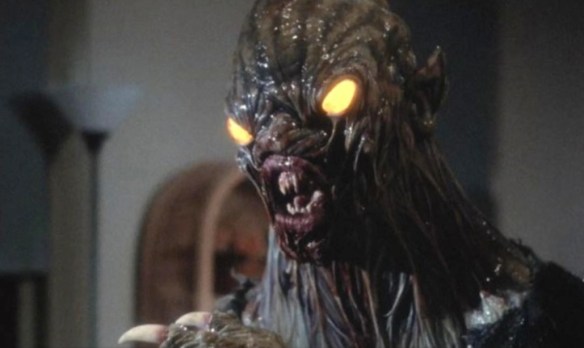
First up this week was C.H.U.D., an ‘84 scifi horror feature concerning the emergence of “cannibalistic humanoid underground dwellers” within the subway tunnels of New York City. As these monsters expand from consuming underground transients to abducting surface dwellers, a fashion photographer, soup kitchen manager, and police captain will all find themselves entrapped in a larger conspiracy, hunted by cannibal beasts from below and rapacious capitalists from above.
I imagine C.H.U.D. has retained its cultural cache largely on the base of its amusingly overwrought title, which has ensured that “Chuds” remain one of the classic beasts an older sibling might warn their lessers never to cross. As such, I didn’t have particularly high expectations for the film itself, and was pleasantly surprised to find out the film is actually a very competent affair, drawing more on the procedural-adjacent conventions of much ‘70s horror than anything resembling a Troma production.
I saw shades of Blow Up in C.H.U.D.’s depiction of fashion photographer George Cooper (John Heard) – not just because of their shared profession, but more because of the film’s willingness to engage with Cooper’s unglamorous daily life, presenting a man whose childish ennui is affecting his relationship with his pregnant wife. And Daniel Stern (Home Alone’s Marv) delights as soup kitchen manager A.J. Shepherd, rising to become the film’s unlikely moral core. I assume what most people remember are the admittedly goofy monster costumes, but amidst the era of clumsy slasher also-rans, C.H.U.D. feels like a welcome throwback to the intelligence and, yes, dignity of ‘70s horror.
Our next viewing was White Heat, a ‘49 gangster film starring James Cagney as Cody Jarrett, the ruthless leader of a notorious gang of outlaws. After robbing a train and killing several crewmen in the process, Cody goes to ground with his boys and mother “Ma” Jarrett, but is ultimately tracked down by the police. He thus implements his backup plan of confessing to a lesser robbery committed by an associate, receiving a light prison sentence as a result. Eager to discover Jarrett’s fence, the police send undercover operative Hank Fallon (Edmond O’Brien) into his cell to befriend him, commencing a deadly, knuckle-biting partnership.
White Heat is an absolutely incendiary picture dominated by the tremendous performance of its half-mad lead, who maintains the manic energy of fiction’s most furious villains for the entire film. While film pacing as a whole has sped up over the medium’s lifetime, White Heat pays no heed to the more subdued conventions of its era, running from train robbery to car chase to prison break and back, all while Cagney’s poorly caged fury threatens to boil over into open violence.
The film only pauses for breath in order to set up the thoughtfully constructed contours of each new conflict, thereby letting its cop and robbers continue a game of cat and mouse where it’s never clear who is playing which role. Fallon’s anxious role calls to mind the tightrope walk of The Departed, and crucially, things never fall apart out of convenience or stupidity – every actor here is intelligent, every turn feels well-earned and impactful. If you’ve any interest in gangster features, White Heat is essentially a perfect example of the form, and Cagney’s Jarrett is one of the all-time screen villains.
Next up in Godzilla’s pan-cinematic rampage was Godzilla vs Megaguirus, the second entry in the “Millennium Era.” This one immediately disregards the continuity established by the preceding entry, instead proposing a chronology where Godzilla has repeatedly emerged throughout the twentieth century in order to feast on Japan’s ill-advised energy advances. Tiring of this tyrannical nuisance, the Godzilla-fighting force known as “G-Graspers” develop a weapon to shoot miniature black holes, and accidentally tear open a wormhole in reality, through which flies a prehistoric egg-bearing dragonfly ready to fuck up everyone’s day.
If that last sentence didn’t clue you in, this is probably the most scattershot and aggressively anti-scientific Godzilla film in the franchise’s history. The way this film disregards any conceivable scientific explanation for its shenanigans seems almost vengeful, as if its scriptwriters were paying back their teachers for their poor physics grades.
Anyway, lunacy of its scientific proposals aside, it’s also simply not a great Godzilla feature. It’s hard to escape the feeling that the series has regressed since the complex kaiju-human dynamics of its second era, and this entry’s convoluted backstory is all in service of a story that still feels like a retread of the first few entries, while its human characters lack the emotional grounding or fundamental appeal to carry their share of the narrative. The film at least culminates in some reasonable rubber suit action, and the compositing of Godzilla within modern city backdrops has improved since the last film, but it already seems clear why this millennium series is widely regarded as the franchise low point.
We then continued our journey through the ongoing V/H/S universe with V/H/S: Beyond. This collection is loosely tethered through a focus on alien encounters, though only three of the five principle shorts actually concern themselves with aliens. In spite of this, Beyond proves itself one of the strongest V/H/S entries so far, for a pretty obvious reason: every single one of its five shorts is a banger.
The role of the Timo Tjahjanto splatterfest is here filled by Jordan Downey’s “Stork,” which sees a secret crew of monster-hunting cops face off against a mansion full of brain-drained alien supplicants, and features perhaps the first instance of “chainsaw vision” I’ve seen. Then there’s an exploration of a Bollywood starlet featuring a fully choreographed dance sequence, an absolutely nauseating riff on skydiving gone wrong, and the most disquieting meditation on interstellar travel since Stephen King’s “The Jaunt.”
V/H/S is one of those franchises that only seems to gain steam as it continues, with the franchise’s rising profile and clear star-making potential drawing ever more talented directors into its orbit. Found footage and anthology filmmaking are a match made in heaven; everything that makes found footage more convenient for small teams is accentuated through a short film structure, which also mitigates the dragging stretches and eventual repetitiveness that often afflicts full-length found footage features. They’ve hit on a remarkable formula here, and I’m happy to see it holding strong.