Wooper: Nearly six years after hashing out our favorite anime of the 2010s, we’ve gotten the band back together for a look at the best of what the previous decade had to offer, and what we found was that it offered quite a lot. Several of us are seasoned enough to have experienced the era firsthand, while others have begun working back through its classic offerings (as with Lenlo’s Throwback Thursday column), but no matter when you got your start, the 2000s remain an essential period for anime as a whole. It was a time of experimentation, with production methods making the transition from analog to digital and more original works being greenlit than ever before. Meanwhile, some of the biggest manga of all time received modest adaptations that nevertheless captured audiences with their stories and characters. The anime movie canon received several key additions, and even the much-maligned moe boom resulted in a handful of great series. Taking all of this into consideration, the six of us cast our votes and landed on a list of 50 shows and films that we feel best represents this pivotal era. But before we get to that, let’s reveal some of the candidates that barely missed the cut.
Honorable Mentions
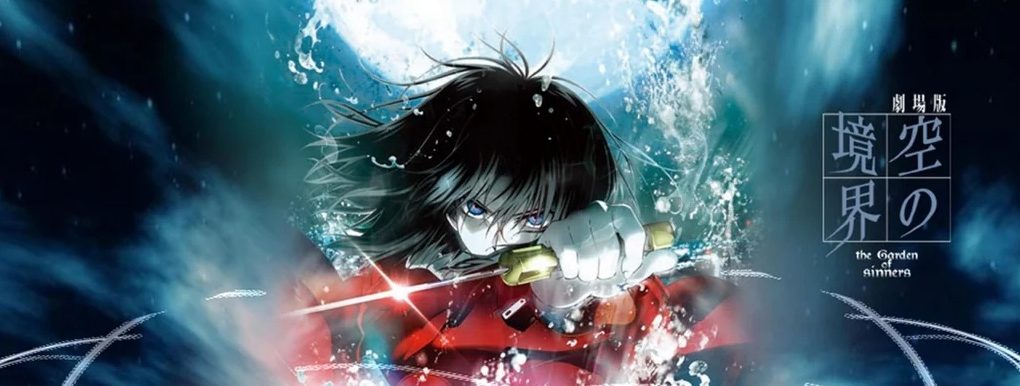
Aidan: The Garden of Sinners
If I were to mention Ufotable then the first anime to come to mind would be Demon Slayer or perhaps Fate/Zero. But in reality the first anime to show Ufotable as an animation powerhouse would be Kara no Kyoukai, or The Garden of Sinners. If you were to take a scene from these films made in 2007 and show it to someone claiming it was made in 2025 then they might actually believe you. I would also say this was the series that put Yuki Kajiura on the map, as despite having the likes of the Hack/Sign OST under her belt this series was where I began to see her name being remembered. Adding to these two we can also mark this as a first work for Kinoko Nasu, the author famous (or infamous) for the Fate franchise. You can actually see characters who are like prototypes for his later work, but this was also a time where Nasu rather excelled at creating dark urban fantasies. Mentioning all of these creators makes this series of movies notable in itself, but it certainly helps that they are a unique beast all of their own. I say few other films could capture the ethereal, fantastic nature that makes a city feel like an ancient ruin with monsters lurking in the shadows. Their stories can border on pretentious at times, but can nonetheless be fairly introspective with immaculate vibes. It can be a bit of a slow burn, but by movie three it can get its hooks into you and leave you with a melancholic haze by series’ end. If you are a fan of Type Moon works this is a must watch, but it’s also a worthwhile watch for any casual fan as well.
Mario: Aoi Hana
With Aoi Hana and Wandering Son (which would release two years after the former show), Takako Shimura established herself as one of the best yuri mangaka of her generation. It’s easy to see why when you watch Aoi Hana’s 2009 adaptation. Her teenage characters are fully realized, complex and vibrant, vulnerable but totally relatable. Centering on two childhood friends who reunite as teenagers, the show explores their coming-of-age relationships with a level of nuance and empathy still rare in anime. Rather than leaning on melodrama or heightened sentimentalism, it focuses instead on small moments: the awkwardness of first love, the uncertainty of belonging, and the bittersweet process of growing apart even while growing up. Visually, Aoi Hana reflects its themes with a soft color palette, gentle character designs, a tender piano-based soundtrack (that is still one of my favorite anime scores of all time) and calm pacing that invites viewers to sit with the characters’ feelings. Even mundane scenes like walking home after school or exchanging glances in a hallway beautifully capture those underlying emotions. What sets the show apart as well is its refusal to oversimplify these messy relationships. At just 11 episodes, it leaves some threads less developed than its manga counterpart, but what we have still offers a thoughtful, elegantly restrained portrayal of yuri romance that feels both universal and deeply personal.
Lenlo: Noein: To Your Other Self
Noein is a difficult show for me to describe, partly because it’s been so long since I watched it, and partly because it’s just a weird show. Do I like it as much as I do because I found it early on in my anime journey, or because it was actually good? Would I like it as much if I rewatched it today? I’m really not sure. For all that I’m about to praise it, Noein is far from perfect. It can be a tad unfocused at times, as if the original creator and director Kazuki Akane wasn’t entirely sure how to express himself, and runs into the problem most time travel anime do with the space between timelines A and B not really making that much sense. What I can say, though, is that Noein was, for a number of years, in my top 10 anime. The cast, their relationships, the exploration of how those relationships and people change as they grow up, and the ever-classic discussion of free will versus fate are all great. Combine that with an epic and varied OST, and some genuinely great animation at times, and you have what I would call a bit of a cult classic.
Wooper: Kemonozume
Imagine an animated version of Romeo and Juliet where the Capulets are flesh-eating monsters who can assume human form, and the Montagues are a clan of martial artists sworn to destroy them. That’s essentially the premise of Masaaki Yuasa’s Kemonozume, which is just as absorbing and experimental as the man’s pedigree would suggest. The show’s purposefully rough character designs and animation can serve as a barrier to entry, but the love story between its protagonists easily penetrates that abstraction. Sensual, ego-driven, humorous, and complicated by the characters’ ties to their feuding families, it’s a romance the likes of which anime has rarely put on screen, in this decade or any other. Kemonozume also explores ugly topics like prejudice and envy, threading the violent grudges of its older players together with the desires of its younger ones. While the show’s main weakness manifests in the insane revenge plot of a late game villain, it nevertheless offers astute commentary on the wonderful and terrible aspects of humanity, and explores the motivations of those who would willingly discard that dichotomy. And in case you’re still on the fence, you can watch the show for Saru, a cute peach-loving monkey who serves as the protagonist’s combat teacher (and would eventually share a name with Yuasa’s future animation studio).
Armitage: Darker Than Black
Darker than Black occupies a peculiar space within the pantheon of great 2000s anime. In the way that it doesn’t have one. And it is quite perplexing to see how this series seems to slip out of people’s minds so easily. I mean, it shows up here on the honorable mentions list because even I forgot about its existence entirely when compiling my personal list of standouts. Yet Darker than Black features all the hallmarks that should make it stand out: it has a soundtrack composed by the legendary Yoko Kanno, it is well-animated and features some really great fight choreography, its core premise features a unique hook that is complemented by some cool worldbuilding, and its protagonist is basically ninja-Batman with supernatural powers. This should really be a slam dunk. It should be heralded as one of the best anime of the noughts. But it isn’t. And I think I sort of understand why that is the case. In the end, while all the ingredients for what makes a memorable show are present here, they fall just short of coming together and coalescing into something truly great. There are bits of brilliance, but there are also narrative decisions that end up being baffling, like the reluctance the show has of breaking out of its episodic mold or the entirety of its second season focusing on a newly introduced character. But a lot of the time, those brilliant bits do shine through and make you wish for what could have been. And at the very least, they definitely make this series’ position in the annals of anime history seem quite harsh and unfair.
#50: Soul Eater
Amun: Soul Eater – what a flawed classic. Sneaking its way into the Top 50, it’s placed precisely where I think it deserves to be: right on the cusp of obscurity and greatness. In these postmodern seasons of shounen anime, many of the tropes that we take for granted (power-up arcs, one sided rivalries, hilariously mismatched power level partners) saw their early days in Soul Eater arcs. Visually, the show remains a wonderfully unique world of Halloween – so much so that mangaka Atsushi Ookubo had to bring its aesthetic back for Fire Force, his follow-up work. I loved the battle systems, the partners, how they powered up and grew together (and the vast disparities, especially between Tsubaki and Black Star). The world was just so fun – Death City was creepy, yet endearing. Scary but cute – the first look at an aesthetic that many teenagers of the 2010s would embrace. With a cast that was always larger than life, and still memorable even now, Soul Eater was a wild ride…all the way up until the end. No discussion of this show can omit the atrocious ending – a tragedy still decried all these years later. Even still, the journey was worth something, and Soul Eater is a show of the 2000s worth remembering.
#49: .hack//Sign
Lenlo: Many people like to call Mushoku Tensei the “Grandfather of Modern Isekai.” And while there are a lot of things wrong with that statement, a big one is the existence of .hack//Sign. Conceptualized in 1999 as a multimedia project from the very beginning, .hack//Sign was the first entry in in the .hack franchise, and also one of the earliest, if not the first, “trapped in a video game” anime ever made. Its legacy can be found in everything from Sword Art Online (published in late 2002), with the use of VR headsets and an MMO based setting, to Log Horizon, with its detailed world and systems. For all that it shares with its children however, .hack//Sign is little like them, focusing less on being a power fantasy and more on the horror of being trapped in a world not your own, that you don’t understand and can never log out of while all of your friends can, with no one knowing what is happening or how to stop it. Add on to that the stunning music of Yuki Kajiura, with .hack//Sign being what I would call her big breakout hit (featuring tracks like Key of the Twilight, Fake Wings and Obsession), and you have something great. Is it perfect? No, it’s the first step in a multimedia franchise made by a second-string studio that didn’t really understand the zeitgeist they were tapping into. But for me, almost 25 years later? .hack//Sign remains something special.
#48: Mononoke
Mario: Embodying the phrase “every frame a painting,” Mononoke is a mesmerising, genre-defining series that elevates its supernatural storytelling into a work of art. It blends horror, psychological drama and folklore with one of most distinctive visual styles the 2000s have to offer. The striking aesthetic is inspired by ukiyo-e woodblock prints with bold colors and unconventional editing, creating a surreal, theatrical, almost nightmarish atmosphere that is both beautiful and dreadful at the same time. Each fragment works as a mystery as our Medicine Seller must uncover the mononoke’s Form, Truth and Reason, turning each arc into an exploration of the human psyche. The show’s pacing is deliberate, its eerie tone and the unsettling sound effects deepening the hypnotic effect of the visuals. Though its experimental approach may feel overwhelming or opaque to some, Mononoke rewards patient viewers with a rare combination of artistic ambition and narrative resonance. One piece of good news is that the franchise recently underwent a revival with three new movies that beautifully capture the spirit of the original. It feels like a miracle that an anime this daring and bold is still going strong.
#47: Azumanga Daioh
Wooper: Rumor has it that the reason we’ve never gotten a Yotsuba&! anime is because mangaka Kiyohiko Azuma was dissatisfied with Azumanga Daioh’s adaptation. This is baffling to me because, while I can understand an author’s desire to protect their work, I don’t know what’s so objectionable about Azumanga’s TV version. It surely isn’t the music by Masaki Kurihara (of Kuricorder Quartet fame), which is just about the brightest and most whimsical anime soundtrack ever put to tape. I can’t imagine it’s the comedic timing, which is expertly protracted to keep you laughing at the show’s repetitive gags. Nor is it likely an issue with a voice cast who immortalized their characters: Chiyo-chan’s squeaky enthusiasm, Yukari-sensei’s intense mood swings, and especially Osaka’s spacey drawl all made for top tier performances. So what’s the deal, Kiyohiko? Why can’t we have nice things? Well, that’s just it – we already got something nice with this adaptation of his first full-length work. For all its cat-themed absurdity and uncatchable puns, Azumanga’s loose story offers a feeling of completeness, tracking its students’ progress through three fun-filled years of high school and submitting nostalgic episodes where they narrate their days from sunup to sundown. Even if Yotsuba never graces our screens beyond a cameo in the Nyanbo! ED, Azumanga Daioh will remain a wonderful touchstone in the world of comedy anime.
#46: Higurashi: When They Cry
Aidan: If you happen to be a Silent Hill fan you may be aware of the author of this piece, as this is Ryukishi’s first notable work, and one of the few Studio Deen works to be held in quite high regard. To those in passing Higurashi has been known as the “Killer Loli” anime, but to those who actually watched it you would know that is quite far from the truth. Higurashi is a puzzle box gifted to the viewer and asks you to slowly unravel it piece by piece. At the beginning of the series you are confused but intrigued by its horror and unexpected developments. But as it continues and each piece falls into place you cannot help but marvel at the intricate construction of a mystery. I truly feel that few series have managed to match the level of Higurashi in clever misdirection and revelation. That a story of horror could also be one of trust and friendship. I spent a lot of time mulling over the mystery of Hinamizawa and I loved every second of it, watching characters that seemed simple at the outset reveal hidden complexities. Though the animation could leave things to be desired, it’s a series that leaves an impression few could shake.
#45: Paprika
Mario: Today, the conversation around Paprika is sadly dominated by two facts: 1) it’s the final film made by the great Satoshi Kon before he passed away, and 2) it’s the movie that inspired Inception (a comparison that does justice justice to neither film). Of course, Paprika itself is much, much more than that. It has Kon’s usual fascination with blurring the line between dream and reality, but it’s also the film where he’s at his most confident to push his vision in a way few animated works have ever matched. The film’s premise – about a doctor and her dream-diving alter ego who investigate the misuse of a device capable of entering human dreams – provides Kon with boundless canvas, allowing him to craft a cinematic experience that challenges conventional storytelling while remaining emotionally resonant. What elevates Paprika above its peers is its breathtaking visual language: scenes flow into one another with ease, objects change shape with symbolic purpose, and the parade sequence in particular is iconic even to this day. Yet Paprika is far more than a visual marvel. Its exploration of identity, the subconscious, and dream logic is intellectually challenging and viscerally exhilarating. Ultimately, Paprika is celebrated as one of the greatest anime films of the decade (and at least for me, the very best) because it dares to push the medium to its furthest artistic limit, offering an experience that is imaginative, unpredictable, emotionally rich and utterly singular.
#44: Emma: A Victorian Romance
Wooper: Emma is, as its title suggests, a romance anime, but its interests run much deeper than the topic of love. Even if you were to set its romantic relationships entirely aside, its questions of grief, duty, and class division would provide fertile ground for a series all on their own. Thankfully, we don’t have to choose between the show’s themes, as they’re all smartly synthesized across its two seasons, and complimented with the sort of symbolism that lets the camera, rather than the characters, do the talking. Already soft-spoken by nature, Emma falls silent with increasing frequency after a devastating personal loss, and must conceal her true thoughts from maid-outfitted co-workers and gossipy socialites alike. Her strength of character impresses everyone she meets, however, including the first son of a nouveau riche family. From there, just about anyone could take an accurate stab at predicting the series’ plot, but even for someone who values originality over execution as I do, this series is an exception. Emma: A Victorian Romance is an anime by, about, and for adults – one that uses meticulous period research and keen behavioral observation to achieve a level of authenticity unmatched within its decade.
#43: One Outs
Lenlo: Normally sports series are more of a shounen thing, all about training hard and besting your rivals. There are exceptions of course, but by and large this holds true in my eyes, as series like Blue Lock and Hajime no Ippo espouse the virtues of hard work and effort. Not here. If anything, One Outs goes directly against those virtues, often feeling more like a gambling anime than a sports one. The series focuses more on how its lead character, Tokuchi Toua, can outsmart both enemies and allies alike to come out on top of any given situation, even if that means losing the match to further his own aims! And as he works his way through the professional baseball circuit, needing more and more dastardly plans or egregious rules violations, he slowly drags his team along with him. All of this comes together to make One Outs one of the most engaging sports series ever made to me, something wholly unique across anime that breaks so many conventions of sports anime while never really leaving the realm of reality.
#42: Aria the Animation
Mario: ARIA the Animation has a reputation as one of the finest healing anime of its era, and for good reason. Its gentle, melancholic acoustic soundtrack is regarded as a modern classic. Its Venice-inspired world of Aqua is rich, unique and always welcoming. The whole cast of characters are fluffy and full of life. But the best qualities of ARIA lie in its atmosphere and pacing. It has a calm, relaxed and introspective outlook that invites viewers to soak in its world rather than rushing them. Each episode is built around small discoveries: a seasonal festival, a hidden alleyway… There are always little treasures in every corner of the city. Moreover, ARIA shifts flawlessly between the characters’ silly chibi reactions and their normal selves, making it light-hearted and free of major conflict but still emotional and profound. The older I get, the more I appreciate ARIA’s gentle pacing and its unique ability to be completely still. Not because life goes by slowly there, but because it can take the time to cherish the wonders of everyday life itself.
#41: 5 Centimeters per Second
Armitage: Winter is my favorite time of the year even though it doesn’t snow around here. I think of it as a reward for getting through the hellishly humid summer, for persevering through the ordeals that life may have thrown my way in the previous ten or so months. I love everything about it. I love the partially frozen dew drops on the leaves of our garden plants in the morning. I love the smell of charred fir bark that gets mixed in with the chilly air on days we build a fire in our backyard. I even love the redness of my nose and how my cheeks sting a little every time I step out of my home. But to quote Watership Down, maybe I don’t really love the winter, but I just enjoy feeling proof against it. I watched 5 Centimeters Per Second a long time ago, but whenever I think of it, I am reminded of winter. Not because I watched it during these months; I didn’t. And only the first of its three parts is set during this season. But what I really remember is two people trying their hardest to be near someone with whom they felt a kind of warmth that they needed to brave through the coldness, both of the weather and of their own lives. Not everyone gets to have something like that. Ones that do often end up losing it before spending the rest of their lives in futile attempts to get it back again. And this film bottles up that entire experience in the space of a single solemn and devastating hour.
#40: Kaiba
Mario: Viewers who watch Kaiba without context could easily mistake it as a kiddie show with cute designs, but Kaiba remains one of Masaaki Yuasa’s darkest works to date (and we’re talking about a guy who has directed multiple shows about flesh-eating monsters). Kaiba presents a clear and thought-provoking exploration of memory, identity and social inequality in a world where people can store and trade their own memories. As bodies can be swapped and identities can be overwritten, the series asks hard questions about what truly defines a person and whether emotional bonds can survive amidst all that. The art style plays an important role in shaping the show’s tone; instead of detailed or realistic designs, Yuasa employs simple shapes, soft lines and bright colors that resemble Tezuka-era styles, creating a gentle appearance that contrasts with the darker themes underneath. Many episodes function like short stories, each centered on characters whose lives have been shaped or damaged by the instability of memory, and together they build a picture of a society filled with both cruelty and moments of kindness. Taken as a whole, even with its abstract tendencies, Kaiba affirms its status as a sophisticated and ambitious exploration of the human condition. Its deeply human message still stays with me long after watching.
#39: Mind Game
Wooper: Before Yuasa became a household name for his Devilman adaptation, before he established his own animation studio in 2013, even before his run of experimental TV series at Madhouse – there was Mind Game. If you didn’t already know it was a manga adaptation, you’d never suspect it, as the film is so stylistically schizophrenic and bizarrely plotted that it seems to have emerged from the ether, but I suppose that’s what you get when you let one of anime’s foremost auteurs run wild with already bonkers source material. Mind Game journeys from a deathly altercation at a restaurant to an encounter with a shapeshifting God to a struggle for survival in the belly of a whale, and it only gets weirder from there, integrating real world photography into its ramshackle art style and eventually staging one of the most psychedelic sex scenes in anime history. And then there’s the film’s climax (no pun intended): a manic jailbreak sequence that chases perspective-warping action with visions of its characters’ pasts and potential futures. Despite all of this strangeness, the film hangs together thanks to its playful, percussion-driven soundtrack, as well as the protagonist’s successful search for freedom and personal fulfillment. Mind Game may not offer a concrete message, but it’s more than capable of stirring that same fulfilled feeling in anyone willing to brave its fragmentary construction.
#38: Millennium Actress
Wooper: Prior to his untimely death in 2010, Satoshi Kon may have been anime’s premier formalist – that is, the director who most emphasized the form of his films, rather than their narratives. You could begin to make that case with any of his works (including the four on this list), but Millennium Actress might be the best starting point, as its melding of the past and present, plus a plethora of scenes from the fictional acting career of its leading lady, make it an editor’s dream. Chiyoko Fujiwara, the actress in question, moves seamlessly between her various roles while describing them for a documentary crew of two, who appear within both her filmography and personal flashbacks via Kon’s trademark wizardry. Though there is a love story to follow, I much prefer catching the many details spread across each of Fujiwara’s pictures, from her turn as a Sengoku era princess to her performance in an Edo period jidaigeki drama. I’ve also grown more appreciative of its muted color scheme with each watch, as the subtle red hues used in Chiyoko’s wardrobe mark her as a constant throughout the movie’s shifting reality, much like our own memories may shape themselves around particular themes. It’s a fantastically assembled work, and though it wasn’t Kon’s last, there couldn’t be a more fitting coda to his oeuvre than the gentle passing of its elderly heroine into a memory of her final film – or perhaps, into the world of cinema itself.
#37: Vampire Hunter D: Bloodlust
Armitage: The vampire is an interesting and often misrepresented figure in modern fiction (granted you believe them to be purely fictional and don’t harbor any superfluous fantasies like me). The 21st century’s most popular piece of vampire media portrays them to be sparkly, baseball-playing pretty boys. And that couldn’t be any further from what the original iteration was intended to be. In Gothic literature (no, wait! don’t leave), the figure of the vampire was intended to be an embodiment of forbidden desires and suppressed immorality. They were to be feared in the same way that you fear your friends and family discovering the Wattpad fan-fiction account you used to update (daily) a decade ago. And somewhere along the 150 or so years between Le Fanu’s Carmilla and The Vampire Diaries, that image got muddled. But I guess Vampire Hunter D: Bloodlust didn’t get the memo. This is a film overflowing with painterly Gothic imagery: misty landscapes with silhouettes afar of crumbling castles and dilapidated ruins, a foreboding moon that hangs above inky clouds, dingy alleyways, and sublime skies. It’s all here. And so too is the sorrow. Of an existence unwanted. Of a life lived at a remove from normalcy. The tragedy of forever trying and failing to fit in, and the solitude that often accompanies the acceptance that you never can. As Jason Isbell’s If We Were Vampires goes, “Maybe time running out is a gift, I’ll work hard ’til the end of my shift. And give you every second I can find. Hope it isn’t me who’s left behind.”
#36: Princess Tutu
Aidan: Princess Tutu is a hard sell for many, as having a children’s magical girl show with themes of ballet and fairy tales isn’t something up most people’s alley. That said, it’s a mistake to judge the show off its premise and rather slow beginning, as there is a subtlety to its story of characters trapped in a tragedy. While there are flaws – its humor often does not land and some episodes feel more like filler – there’s also a certain old school sophistication to its presentation and writing, as well as an intriguing meta element to its story. Each episode sets the tone with a fairy tale with an often tragic end which somehow foretells the characters’ fates. It is a unique duck in the way it takes from the magical girl genre and commits to its uncommon motifs. As stated before its faults are mainly in its beginning, where it sticks too tightly to its formula and may be too childish for those unaccustomed to its tone. But for those who give it a chance, there is a story that doesn’t talk down to its audience – one of pathos and defiance of the roles that people can be forced to play.
#35: Natsume’s Book of Friends
Amun: I only discovered this show in the past couple of years, and boy, am I glad I did – Natsume’s Book of Friends ranks in my current top 5 anime. Seasons 1 and 2, which came out in the 2000s, showcase all the things I love about this show: the quiet development of the relationships and emotions between the characters, the episodic exploration of unlike worlds interacting, and our young hero Natsume growing up and finding his own way between the two worlds. Throw in the slow burn development of the mysterious character of Reiko and this is a recipe for greatness. If memory serves correctly, those first two seasons were about the development of the core cast of yokai that would serve as Natsume’s key inner circle, specifically the very fun, very large, very powerful Nyanko-sensei. In the seasons following, Nyanko-sensei is clearly Natsume’s protector, but early seasons saw them trying to figure out the relationship, which mostly hinged on the desire for the quite powerful Book of Friends. While Natsume doesn’t feature many humans, a few of the recurring ones (including Taki, who I hope is the future love interest!) were introduced – most importantly Tanuma, who is probably Natsume’s best human friend. These early years really set the tone that’s been carried on by the many subsequent seasons of a fantastic show dealing with a young man caught between two worlds. An all time favorite of mine, and very deserving to be on this list.
#34: Wolf’s Rain
Wooper: Several years after the passing of screenwriter Keiko Nobumoto, comments surfaced from the director of Wolf’s Rain indicating that he wasn’t sure he’d understood her intentions for the series, even while working on it two decades prior. Though he expressed himself awkwardly, blaming his lack of comprehension on the gender gap between them, I can understand his confusion, as her brainchild is far from straightforward. Its story is driven by a mythology that it never fully explains, and its characters journey through a desolate world in search of a “Paradise” that they never reach. The concluding OVA, set at the dawn of a new ice age, is some of the bleakest anime produced in this or any other decade. But I believe that Nobumoto wrote Wolf’s Rain with purpose, to pose a question to all who follow its noble beasts across their forlorn planet: when the end of the world comes, how will you respond? Will you prioritize comfort, or strive to accomplish one last task? Will you cling to someone, even if it’s not the person you expect, or will despair be your only partner in death? Will you place your faith in a tenuous afterlife, or trust that only oblivion awaits you? Wolf’s Rain doesn’t prescribe answers to these lofty problems, but rather urges us to consider them for ourselves, making it one of the decade’s most thought-provoking offerings.
#33: Code Geass
Armitage: Code Geass, along with another anime further down on this list, was my gateway into this medium. To this day, it remains one of the first shows I recommend to a prospective pilgrim looking to convert to the good faith. And it’s hard to deny that it is easy to love, especially at an impressionable age. It has a catchy hook: a young boy gets to play God, to will any person in the whole wide world to do anything he desires of them. And the show then goes on to layer a series of complexities on top of its original premise, one by one, and puts its protagonist, Lelouch Lamperouge, at the center of a web of schemes and political machinations that get more ridiculous and absurd by the episode. Now, that alone can make for a very compelling and fulfilling viewing experience, but what really elevates Code Geass above various other shows that have attempted to capture its magic is the sincerity at the heart of it all. It does feature a narrative that has more twists and cliffhangers than you can shake a stick at, but the ratcheting stakes at every turn only work because you have character relationships that keep them from feeling inconsequential. How these relationships get strained, ruptured, and mended, only to fall apart again, is what gives this story a kind of momentum that builds and builds to culminate in a finale for the ages. It’s a messy and often outrageous show, but it does pay off your investment, and then some.
#32: Howl’s Moving Castle
Lenlo: What is there to say about this classic Ghibli film that hasn’t already been said in numerous reviews prior to this? Should I talk about the gorgeous animation, from the stunning backgrounds to the incredible effects work? What about the story of long-lost loves, war, and self-actualization with one of the most engaging core casts in any anime film period? I could even gush about the film’s music, something often overlooked with how much there is to talk about elsewhere. The point is, Howl’s Moving Castle is a seminal work in my life, and contributed greatly to my understanding and enjoyment of animation, topped only by a film further down this list. Watching Miyazaki adapt a 1980s British fantasy novel into a modern 2000s era Japanese film, modifying the plot and characters to fit the story he wants to tell while staying true to the book’s original themes, is beautiful. It is, in my opinion, the best film Studio Ghibli has ever made.
#31: Clannad: After Story
Armitage: Even though they’ve largely faded away in the last decade, Studio Key’s name used to get anime fans excited like few others. Their stories often followed a trademark template: guy comes across (usually multiple) girl(s), gets embroiled in their daily affairs, makes it his mission to help them, and some supernatural shenanigans ensue, leading to an emotionally charged finale. This isn’t a unique outline for a premise by any stretch of the imagination. Romance stories in anime, or any other medium, for that matter, follow this exact template. But in all these stories that resolve in heartbreak or happily ever afters, we never really get to see what happens after said resolution. This is where Clannad: After Story sets itself apart. Following directly from the events of the first season, After Story gives a peek into the daily lives of its two protagonists, Tomoya and Nagisa, who were high-school sweethearts but are now happily married. They were meant to be together, and so they are. But the trials and tribulations that life has in store for us do not stop at finding the right person to spend our lives with. There are still bills to be paid, groceries to be bought, and various other mundanities that add up over the course of time, not to mention the stress and anxiety of planning for a future in which you’d want to bring another life into the world. None of this is glamorous stuff, but the greatest achievement of Clannad: After Story lies in its ability to still make it all seem compelling and even quite beautiful.
#30: Texhnolyze
Mario: It takes guts, and skill, to open a show with almost 15 minutes of no dialogue (the only other one I can think of is Wall-E). For Texhnolyze, it’s done to establish a mood that is built from atmosphere rather than exposition, relying on visuals – and more importantly, sound – to direct and invite the audience into the underground city of Lux. Despite possessing technology where humans can replace lost limbs with mechanical prosthetics, the city is on the verge of social collapse and death, its tech having led to a downward spiral where its people lost their humanity in the process. The show is bleak and mesmerising, with a dull color palette that reinforces Lux’s oppressive environment. Director Hiroshi Hamasaki and writer Chiaki J. Konaka crafted the narrative with deliberate restraint, using silence, muted conversations, and long stretches of visual storytelling to create a sense of isolation and emptiness from the characters. A minimalist soundtrack deepens the show’s sense of inevitable decline, and the final episodes push its ideas to their climax in a haunting apocalyptic vision. Though Texhnolyze demands patience and attention, it rewards the viewer with an uncompromising examination of despair, and the remnants of hope within a dying world.
#29: Hikaru no Go
Amun: Lenlo’s previously written about Hikaru no Go, so I highly encourage you to check out his very in-depth review. My fondness for Hikaru no Go is a bit more personal, as it’s the first full seasonal anime I ever watched. In fact, it inspired my brother so much that he remains a very good amateur Go player (hovering around 1-dan for those of you who remember the rankings). In recent years, we were able to watch – and understand – one of the historic moments of AI development where Lee Sedol took on AlphaGo in a thrilling series (I wish they had named their program Sai instead of AlphaGo…). Hikaru no Go is a fantastic journey, not because the protagonist is a genius to begin with, but because he develops his own love and joy for the game from being around his master, eventually inheriting his game. With what I consider the best rivalry in anime, the show assembles a motley crew to pursue Go greatness, with tournaments, tricks, and all manners of shenanigans (Toya getting bullied by having to play multiple games of blind Go is a phenomenal scene). Spanning 75 episodes, Hikaru no Go continued its excellence throughout the entire series – and had one of the most emotionally gut wrenching climaxes of the decade (no spoilers here). If nothing else, I’m certain an entire generation of anime watchers from this era can appreciate and understand an archaic Japanese board game – probably the goal of the series, in which case, job well done.
#28: Moribito: Guardian of the Spirit
Wooper: Fantasy author Nahoko Uehashi’s ethnological background is on full display in Seirei no Moribito, the first of her three novel series to be adapted for animation. From bustling capital cities to indigenous communal settlements to rugged mountain-dwelling tribes, her skill at designing fictional societies is on full display across this series – and it has the visuals to back it up. At the time of its release, Moribito was among the most lavishly produced TV anime ever, boasting thrilling fight scenes (typically involving its spear-wielding heroine Balsa) and handsome art direction that enlivened its multicultural setting. Kenji Kawai’s classical soundtrack added urgency to its battles and reverence to its depiction of the natural world, and trips to the show’s parallel spirit world allowed it to flex its mythological muscles. But what of the characters? That’s where Moribito has attracted criticism over the years, both for the protagonist’s stoicism and the petulance of the prince she protects. Personally, though, I can’t say I share that perspective. Balsa’s self-discipline makes her an aspirational figure, with the rare cracks in her composure constituting some of the series’ most memorable moments. And having just finished a rewatch, I found that Prince Chagum’s gradual maturation befit the story’s sweeping nature. By the time the two of them were forced to say their goodbyes in the finale, their relationship had captured me all over again.
#27: Great Teacher Onizuka
Lenlo: It’s hard to explain the special place Great Teacher Onizuka has in my heart. At first glance, it’s so much of what I hate in anime. Panty shots, bawdy jokes and slapstick humor wrapped up in an irreverent protagonist. Yet in just a single episode, we learn that behind all of that irreverence and humor is this empathetic core that understands how influential just a few years of high school can be on a child’s life. Basically what I’m saying is, Great Teacher Onizuka is the anime equivalent of The Ron Clark Story or Dead Poets Society. It’s all about a teacher doing their best for their students, both in and out of school, in ways that may or may not be illegal, yet are always to help those kids lead better, happier lives. Combine that with anime’s tendency to go over the top, from showing kids just how dangerous the gang life they aspire to can be before pulling them out at the last moment, to literally breaking down a wall in their house to force their parents to interact with each other, and you have something that truly wants to connect with both students and adults, treating them as equals that should listen to each other. God I love it, and if I were still writing reviews this would deserve one.
#26: Toradora
Amun: I don’t know of many other shows that have elicited as emotional a response from me as Toradora. I rewatched this a few years ago, and I had to take care about the hours when I did it, so as not to wake the rest of my household by yelling at the screen. Taiga “Palmtop Tiger” Aisaka is THE gold standard for tsunderes – no question about it. The other four main characters, each with their own demons to overcome and selves to find, are one of the greatest quartets in anime history. What’s crazy to me is that the lesser half of the four – Yuusaku and Minori – are more emotionally complex and established than most other series’ leads. Their journey of self-realization, heartbreak, and even some minor mental breakdowns, all tells the real story of teenage battles that are so trivial in the grand scheme of things, but feel so huge at the time. Even as adults, we can all remember those days (sometimes not fondly), but appreciate the accuracy of their representation. And ultimately, we get to cheer for these silly kids as they grow up and discover what’s really important. Maybe I rate this show so highly on nostalgia, but Toradora will always have a place in my anime pantheon.
#25: Paranoia Agent
Mario: Paranoia Agent is the only series created by the great Satoshi Kon, based on unused ideas that he had gathered from his previous features. That alone explains the fractured, almost stand-alone middle stretch where the show explores different sets of characters who experience their own personal traumas and societal expectations in different ways. The show also contains my all time favorite individual episode (“Happy Family Planning,” for those who are curious) that makes me laugh, makes me cry, makes me feel. But most impressive of all, Paranoia Agent strengthens its narrative thanks to these seemingly unrelated stories, tying them up with an original crime thriller that serves as a critique of modern culture’s obsession with escapism, media sensationalism, and the collective tendency to externalise blame rather than face uncomfortable truths. As with all of Kon’s work, the show employs a distinctive style that combines detailed urban settings with increasingly surreal and symbolic imagery, blending reality with hallucinations and dream sequences. Ultimately, these stories suggest that the figure of Lil Slugger functions less as a villain and more as a manifestation of societal breakdown. Paranoia Agent endures as a sharp commentary wrapped in a gripping psychological narrative, offering insights that remain relevant well after its airing.
#24: Cowboy Bebop: Knockin’ on Heaven’s Door
Amun: Okay, I have to be honest – me voting for Cowboy Bebop: Knockin’ on Heaven’s Door was really just a ploy to get something from the Bebop series on the list. The mainline show missed out on qualifying over a technicality of airing a few years prior (despite the franchise airing in the United States within the appropriate timeframe). However, Knockin’ on Heaven’s Door manages to capture the fun (albeit slightly melancholy) spirit of Cowboy Bebop perfectly, making it a suitable proxy on this list. Great action sequences full of physical comedy gags at the convenience store robbery or a fantastic dogfight scene over a smooth jazz soundtrack – that’s what Bebop is about. The melancholy comes out in the larger villain’s story and vague social commentary on society as a whole – it’s that hint of tonal sourness that makes the Bebop convocation work so perfectly. While this standalone story doesn’t really affect the main series’ universe, you still get to spend time with these characters (Ed especially) – and I really can’t complain about that. Cowboy Bebop the show may not have a trophy from this list, but we can award one to its relative for all the same reasons that make both great.
#23: Honey & Clover
Armitage: Honey & Clover is my favorite anime. It is the one show I rewatch every year, as the leaves of fall start to turn ash grey. It is my comfort on days I feel lonesome. It is my cup of hot chocolate in December. It is my marshmallows and candy canes. It also breaks my heart every time I return to it, in all the same places. The thing is, I have never found it easy to make friends. I try my best to feign smiles, to start conversations. I’m always the one waiting for the others to join me so we can walk home together, even though they mostly just talk amongst themselves. I’ve tried, I’ve really tried, to keep people from slipping away. But eventually, everyone turns to sand. The cast of characters in Honey & Clover truly represent what I have always desired in my life. They are all flawed people, who make mistakes and stumble and fall while running after things they can never have. Sometimes, they end up making empty promises that don’t come true. But no matter what, they make sure to take care of each other and share bonds that feel genuine, celebrating each other’s successes and lifting them up in moments of defeat. They goof around and hang out, sometimes fight, and often end up misinterpreting each other. But they never drift apart for good. They never give up on each other. I’ve never had a group of friends like that. But for a few hours each year, it really feels like I do.
#22: Kaiji: Ultimate Survivor
Lenlo: Kaiji… How do I explain Kaiji to people… You know all of the wildest parts of Kakegurui, like where the one crazy girl puts a gun to her head and plays Russian Roulette as her game of choice? Well that’s just a regular Tuesday here. Kaiji is all about taking stupid gambling ideas to the next level by tossing Squid Games-esque twists and turns at them. Rock Paper Scissors? You get four of each and once you use one, it’s gone forever, restricting your future options – oh, and losing all of them means enslavement. Pachinko? Let’s tilt the entire building the machine is located in to throw off its precisely made internal mechanisms to give yourself a sliver of a chance to win. Another card game? Every time you lose a screw spins closer and closer to puncturing your inner ear and killing you. Kaiji is the quintessential gambling anime all about feeling stuck in life because of unfair systems and rising up against them, beating the right at their own games, and making off with their money after embarrassing them in front of all of their friends and employees, and it’s absolutely rad. Not to mention it has a bopping OST.
#21: Spice and Wolf
Aidan: Anime has a number of great shows with hard-to-sell premises, from making a dictionary, the art of telling a story really well in front of an audience, or a sports show about a Japanese card game that requires the memorisation of 100 poems. Spice and Wolf is one of these kinds of shows in that it’s about a wolf spirit and a merchant traveling around discussing the ins and outs of medieval economics. Still, that is quite a simplification of this show’s appeal, and admittedly the rather fascinating discussions are not really going to be the true draw of the story. Really with the chemistry between these two main characters, they could likely be discussing the finer details of professional stamp collecting and still make it an engaging watch. Holo and Lawrence truly do carry this story with their banter, and watching them grow closer as they playfully flirt is always a joy. Of course this isn’t just a story of relationship drama, as the actual plotlines regarding playing the stock market or getting scammed into buying armour before the cancellation of a war are a rarity in this medium, while being full of their own twists and turns. In a way this is a show that makes the watcher feel clever and demonstrates that presentation can make a significant difference in how someone absorbs information. Perhaps I could have paid a lot more attention in school if educational material had more wise wolves.
#20: Baccano!
Armitage: Baccano! is, for my money, the coolest anime on this entire list. And not in a try-hard, ‘rolling up a cigarette while wearing a leather jacket in a heat wave’ kind of way. It is rather effortless in its coolness. From the first beats of its poppy jazz opening, we are given the green light to get onboard its Prohibition era-inspired setting of a passenger train carrying all manner of eccentric personalities. These characters range from suave assassins and psychotic gangsters to immortal alchemists and bloodthirsty men dressed in white, with an adversarial entity that might as well be the walking embodiment of a terrifying modern myth, and in the midst of all the carnage and chaos are the lovable goofballs that are Isaac and Miria. It’s a glorious cast that could have easily carried a two-cour show. But Baccano!’s real strength lies in how impeccably paced it is. Every episode, backed by a rapturous soundtrack, propels the narrative forward in a myriad of seemingly unrelated directions. Multiple timelines get flipped around, and allegiances are broken and remade on a dime. And yes, all these threads do converge, but like an actual thread, this show really isn’t about beginnings or endings; it’s about everything that gets swept along and knotted in between.
#19: FLCL
Wooper: If you were to travel 20 years back in time and tell my teenage self that FLCL would some day spawn multiple sequels, he’d tell you to get outta town. Back then I’d have been too baffled by the series’ elusive plot and manic depressive attitude to believe such a tall tale. Regrettably, that future has come to pass, but the confounding energy of that original OVA is no less striking in 2025 than it was during Adult Swim’s heyday. Fooly Cooly is stuffed to the gills with all the things teenage boys love (motorcycles, guitars, robots, older women), but it’s just as consumed by all the things they fear (puberty, responsibility, adulthood, older women). Its cast must reckon with the hazards of both categories, birthing mechs from their skulls while a kooky, Vespa-riding femme fatale runs roughshod across their small town. Though the story is virtually incomprehensible, it has something to say about overcoming adolescent anxiety, and it does so with gusto, confronting its reluctant protagonist with hopeless crushes and increasingly Freudian enemies for him to defeat. And of course, all of this craziness is set to a blaring power pop soundtrack by The Pillows, the band that kickstarted thousands of western fans’ journeys into the world of J-rock. It’s an inimitable, beautiful, half-mad Frankenstein’s monster of an anime – there’s nothing else like FLCL, and there likely never will be.
#18: Tokyo Godfathers
Lenlo: Previously on this list I talked about Howl’s Moving Castle, and how it was a very important movie in the timeline of my experience with animation, topped only by a single other animated film out there. Well, Tokyo Godfathers is that film. Much like with Howl’s, I could spend a great deal of this blurb just describing the movie’s production, about how Satoshi Kon and studio Madhouse brought this world and these characters to life in a way I had never seen before, and might never see again. Instead though, I want to spend it talking about what it means to me. How when I was growing up, as my parents were divorcing, it helped me understand and reconcile, and eventually reconnect, with one of them. How it helped me understand and empathize with those less fortunate, how it was my first introduction to trans characters done right and not just for shitty jokes, and how at its core it’s just a damn good Christmas movie. To this day, I do not believe a more meaningful or impactful animated film has been made, and it’s probably in my top 3 films of all time, full stop.
#17: The Melancholy of Haruhi Suzumiya
Amun: Going into the second season of Melancholy of Haruhi Suzumiya, I was convinced that this was going to be the next juggernaut of anime. In fact, if you had asked past Amun what series I was still going to be watching sequels of in 2025, Haruhi probably would have been on the list. Reality hasn’t quite panned out that way, with only a few spin-offs here and there in the years since, but that’s to just give an idea of how much steam this series had after its first season (I’d compare it to Frieren levels of hype). And then…the Endless Eight. A glorious middle finger to the audience which culminated in the pivoting of the series and the death knell of future seasonal anime (I was also aghast, as it removed a ton of potential content from my much anticipated second season). Despite the atrocious eight episodes in the middle, though, Haruhi had fantastic elements. To start, the premise was one of a kind: what if an all-powerful being happened to be a high school girl – and all her friends had to keep her happy and entertained to avoid ending the universe? It’s so absurd, and so fun, that even two odd decades later, it brings a smile to my face. With the supporting cast to the all-powerful high school girl (I am a shameless Nagato Yuki stan and was a huge fan of the spin-off The Disappearance of Nagato Yuki-chan) being fantastic as well, Haruhi’s hijinks, both supernatural and mundane, are always a good (if sometimes confusing) adventure.
#16: Kino’s Journey
Aidan: The fundamentals of storytelling are often decided by some ubiquitous writing rules. Show, don’t tell, make your characters well developed, keep the world’s internal logic feasible, and so forth. But Kino’s Journey is odd in that it doesn’t really follow those traditional rules. The world of Kino doesn’t really make logical sense, as the different countries she visits are more microcosms rather than connected places. The people often are devices to illustrate a point, sometimes acting in irrational and odd ways. It’s a story that has the goal to not so much be entertainment but rather make you think. Kino’s Journey is in that way more of a modern parable than a story, but it has certainly given me a fair share of pensive silences. Three men work on a train track unaware of each other; two build and lay down the track, while the third undoes the work of the other two. Each feels content in their work. Is that a tragedy or an inspiration? Kino is full of these questions, and you can debate its many tales and messages that reflect the various things we face in our own lives. We, like Kino, are passive observers walking into these stories to pass neither judgement nor interference, instead seeing their irrational exaggerations bring into focus ideas we may not have truly considered. Many shows want to entertain, but this is one that shows you a story and then asks you to truly consider it in reflection to your own life.
#15: Nana
Wooper: There are a lot of accomplished dramas on this list, but when it comes to creating funny, flawed, fully-realized female characters, Nana stands alone. Its identically named protagonists have complicated backstories and messy relationship histories, and they frequently act in ways that are selfish or short-sighted. That’s a rarity for leading women in anime, and the series’ list of difficult topics is even rarer: sexual infidelity, emotional blackmail, abusive partnerships, and unplanned pregnancy, just to name a few. It would be fair to call this show melodramatic, but even so, it pays close attention to the psychology of its cast, linking their codependency and abandonment issues with external symptoms like panic attacks and dissociative episodes. It may sound like a punishing watch, but what elevates Nana to greatness is the sweetness it supplies to balance its bitter side. There’s a manzai-esque rhythm to its comedy, transforming personal foibles like flightiness and irritability into reliable gag-starters. The J-rock soundtrack ties together countless scenes (especially in the ED-restoring [Fixd] release), allowing the show to smoothly segue in and out of its heaviest material. And the friendship between the two eponymous characters is so memorable that, even after a separation spanning untold years, both they and the series’ fandom wish for nothing more than their long-awaited reunion.
#14: Haibane Renmei
Mario: Haibane Renmei has the rare ability to remind you of a place in your memories that you had never been before. Part of this is because it has no interest in explaining its symbolism or its mysteries, instead leaving it to the audience to connect the dots and make sense of the world themselves. The other part is that it pays tremendous attention to the details of its mercantile town, of how its Haibane spend their days, and how they interact with each other. From that unique setting, the show ponders serious themes of existentialism (who its characters are) and how their purpose fits into this society that is bound by strict rules and unspoken taboos. Rather than relying on plot twists or dramatic conflicts, Haibane Renmei unfolds through subtle interactions, introspective moments and gentle pacing that reflect themes of guilt, redemption and accepting one’s past. Visually, the show contrasts realistic character designs with muted backgrounds to reinforce a sense of place that exists slightly out of reality. By the time the narrative shifts into a heavier emotional arc involving guilt and the possibility of moving forward, the groundwork has been laid with such nuance that its impact feels both earned and deeply moving. Just like the characters, we don’t get to learn the answers to nearly half of the questions the series ponders, but just like life itself, it’s perfectly fine not knowing. And that’s precisely why Haibane Renmei rings truer after each viewing.
#13: Hajime no Ippo
Lenlo: Ah, Hajime no Ippo. You don’t get much more classical shounen than this. All that fancy scheming and rules manipulation of One Outs? Toss it out the window more like, you’re going to watch two guys beat the ever-loving shit out of each other, their feet sliding along the canvas to the sound of screeching tires, fists rocketing forward like jet engines, punches landing with the impact of a .50 caliber rifle, and you will like it. Seriously, watch this one clip and you’ll figure out if this series is for you – don’t worry, it’s a side-fight so it won’t spoil anything. Point is, there are reasons Hajime no Ippo is one of the longest-running series still active today. It’s a world-spanning love letter to the sport of boxing, never downplaying anything about the sport, from the gruesome injuries and how it taxes the fighters’ bodies to the heights of emotion you’ll feel in a fight. The mangaka opened his own boxing gym and helps train actual fighters in his free time for god’s sake! It is quite possibly the most red-blooded, masculine sports anime ever made, and if that’s your jam, you will love it. Honestly, if you watch it, you’ll probably end up reading the manga too, because the current adaptation only covers maybe a third of the overall series at best.
#12: Gankutsuou
Aidan: The Count of Monte Cristo is often considered the greatest tale of revenge ever told. It has had many different adaptations and inspired many different stories. And the funniest fact about it is that the most faithful adaptation of the story is an anime where the Count is a blue space vampire. Gankutsuou is odd in that it was never actually meant to be a Monte Cristo adaptation at all, but instead a version of The Stars, My Destination, which its production company failed to get the rights for. Thus it was pivoted into a Monte Cristo adaption, and I am truly glad for that as studio Gonzo managed to make something genuinely timeless, with an experimental visual style that can make the show look quite stunning at times. Gankutsuou tackles the revenge of Edmond Dantès in a different light, as the focus is put on the latter half of the novel, where we see the Count’s story through the eyes of someone lacking the context of his past. Unlike many adaptations, we get a version of the Count’s revenge where he is not quite justified in his actions, and watch as the fallout of those actions punishes those not intended. There is still the satisfaction of seeing the guilty face retribution by the Count’s elaborate machinations, but as the dominos fall we can see how it tears others apart and forces them to heal in the aftermath. It is doubtful there is anyone who has not experienced this story before in some fashion, but even if you know the outcome this anime makes for a fantastic watch.
#11: Tengen Toppa Gurren Lagann
Aidan: I have dabbled a bit in the wide pool of old school mecha anime with your Gundams, GaoGaiGars, Gunbusters and Giant Robos. While they all have value, I tended to notice compromises in that the shorter shows were often sparse of action, and the longer shows could be formulaic and more advertisements for robot toys. Gurren Lagann is a show that feels like it was built from every old school mecha being grinded into a powder, sieved through the finest sieve, and distilled into a concoction that held the strengths of those shows to the finest purity. There is no fluff to Gurren Lagann, as each of its 27 episodes holds an animated action set piece. It’s not the show with the deepest characters nor an unpredictable story, but is perhaps the greatest motivational speech you could ever get in animated form. This is a show filled with that childlike confidence that makes you think ‘to hell with limits,’ because you can truly do anything you put your mind to. It starts with the smallest scope and tops itself over and over again, reaching levels of absolute absurdity, and just when you think it cannot possibly go any higher, it does. It’s an absolute roller coaster with no stop button that will have you smiling with childish glee until the end. Then when the world tries to convince you that you will never succeed and to just surrender, you can respond, “Just who the hell do you think I am?!”
#10: Black Lagoon
Amun: I’m not sure if Black Lagoon is the first, but I believe it at least to be one of the first, anime that featured a straight man (comedic, not sexual) thrust into an extraordinary (and ridiculous) non-supernatural situation. Plenty of shows have done it to various effect since then (the one that comes to mind immediately is Amagi Brilliant Park, and you can find countless isekais now about salaryman reincarnating into settings du jour), but Black Lagoon predates nearly all of them. The humor stems largely from physical action, but there are other moments of hilarity within its otherwise threatening criminal empires. One of the absolute best scenes in anime comes when the head of the Russian mafia has to scroll through hours of adult films looking for clues because she couldn’t find an intern to do it. Her level of resignation about “having to do everything herself” is a sentiment well shared by many professional adults. The juxtaposition of that with the dual-Beretta-wielding, tiny-shorts-wearing Revy running around murdering an entire ship full of people – that’s the duality that makes Black Lagoon great. It’s great fun, but it still allows a few serious moments to slip in through the cracks – not to worry though, in short order it’s back to explosions and good times!
Armitage: There is probably no other anime I have seen that is as foul-mouthed as Black Lagoon. Not in its vernacular, though it may have a claim to that as well (God bless, Balalaika), but in how irreverent it is. It carries a brand of chaos that doesn’t care if it comes across as crass. It is pulp fiction through and through, with the insanity meter dialed up to 11. Just look at any image online of its leading lady, Revy, and how the show depicts her – frayed and unbuttoned mini-shorts, carrying a gun in each fingerless-gloved hand. Is it practical for a cold-blooded assassin to dress like that? Of course not. Then again, is it practical for a submarine to lift off and shoot torpedoes into a helicopter while levitating in mid-air? No. But who cares!? This is a show in which you get cigarette cherry kisses and sharpshooting nuns and a walking death machine for a maid. It is a show where you follow and grow to root for a morally bankrupt group of mercenaries who’d shoot a unicorn for a good payday. You know, ‘cause they’re the good guys. It is a show in which you cheer when a defenseless child gets shot in the knee as a woman lights up a cigarette while sitting by a fountain. It is balls-to-the-wall, no-holds-barred, popcorn action fare. No grand soliloquies, no pretension. Come cough up the cash, and watch shit explode.
#9: Planetes
Wooper: What appears at first to be an underdog story about a ragtag group of space debris collectors is actually one of the angriest TV anime ever produced. As its plot develops, Planetes dives headlong into a world of corporate collusion, global inequality, and political terrorism, dragging its dual protagonists – a surly individualist and a shrill optimist – along for the ride. The show’s character work isn’t to be underestimated, and its tone can range from humorous to heartfelt, particularly in the early episodes. What makes Planetes truly remarkable, though, is its dire warning to first world nations not to distribute extraterrestrial resources solely among themselves. This is a series with the willingness to put entertainment aside and bluntly condemn an eerily familiar profit-obsessed ideology, to the point that it has as much sympathy for violent revolutionaries as it does for its principal cast. Half a century remains until we reach 2075, the year of Planetes’ setting; let’s hope humanity reverses its present course before we turn the show’s plot into a prophecy.
Aidan: The beginning of Planetes recounts an incident wherein a single screw floating through space was enough to destroy a space shuttle. From that point on, this show dismantles the romanticised notion of a future set amidst the stars. We follow a group of employees who are essentially space garbage men and watch as corporate cynicism slowly dismantles the fantasy of space, with understaffed departments and cost cutting sacrifices. It’s a show with a character-driven first half followed by its main plot kicking off in the second half of the series, providing a remarkably realistic depiction of what regular space travel could be in the not-too-distant future. In this it has a rather meaty wealth of political, philosophical and socioeconomic factors within its various character stories. It also happens to have a rare ending that ties everything up very nicely. In Planetes, the expectations of the viewer from fiction are defied in favor of realistic, mundane outcomes and a warning about what could very well be a potential future for us.
#8: Samurai Champloo
Lenlo: I’ll admit, it took me a while to really “get” Samurai Champloo. My first experience with it was when it aired on Adult Swim back in 2005, when I was just 11 years old and had absolutely no idea what I was watching. Flash forward 14 years to the next time I watch the series, suddenly it all kind of just… clicks. As cliche as it sounds, Samurai Champloo isn’t a show about the destination, our goal here isn’t just to get to the end, it’s about the journey. Champloo is, in every sense of the word, an odyssey. We watch our characters begin as strangers, barely aware of each other or where they are, only to slowly come together as they travel across Japan, visiting a myriad of interesting locations and experiencing different subcultures, all the while being pulled this way and that by the powers that be getting in their way. Combine this with a shockingly modern soundtrack for the time (I really wish more anime would use rap or blues style tracks) and you have what is, in my opinion, one of Watanabe’s most engaging works.
Mario: After the “little” success that was Cowboy Bebop, Shinichiro Watanabe stepped up for Samurai Champloo with another marvelous combo: traditional samurai road trip meets modern hip-hop culture. The result is an alternative Edo era that feels retro and cool, where the show’s leading trio go through episodic adventures that are diverse in tone. Director Watanabe brings the same eclectic sensibilities seen in Bebop, mixing playful presentation with moments of emotional weight. Sure, there are some stories that are worse than the others (I still don’t like the baseball episode at all), but when it hits, it gives our main characters opportunities to reflect on love and loss, or tests their relationship altogether. Visually, Samurai Champloo carves its own identity: action sequences are crisp and well-choreographed, and character designs are bold and distinctive, with each of them having their own speech patterns and mannerisms. And the soundtrack, oh boy…with producers like Nujabes and Fat Jon on board, it just gets better with each listen. Ultimately, I remember Samurai Champloo more for its style than its substance, but it’s also true that 20 years later, we still haven’t seen anything quite like it.
#7: Ghost in the Shell:
Stand Alone Complex
Amun: I don’t often find myself wishing to be a part of anime worlds, but if I had to choose, Ghost in the Shell: SAC is probably the one I’d pick. For those of us who grew up loving the grungy tech of the 90s, Ghost in the Shell is the epitome of the glamorous “hacker” era – with characters who actually get out there and shoot people, too! It’s cyberpunk without excessive edginess – a future with AI that we actually want to live in (instead of this confusing one we’ve got). The story is engaging, the mysteries confusing, the world feels large and the conspiracies have high stakes. The Laughing Man arc is one of my all-time favorites – the “I thought what I’d do is, I’d pretend I was one of those deaf-mutes” quote from Catcher in the Rye is an all-time classic. Section 9 just has the best characters (I personally agree with Togusa’s take on the reliability of revolvers). It’s an anime from a time when even the grungy future was bright – can’t say there aren’t parts that I’d trade our version for.
Armitage: Stand Alone Complex is a very different beast from Mamoru Oshii’s film adaptations. While the latter is more introspective and melancholic, giving us better insight into the character of Major Motoko Kusanagi and how she comes to terms with the humanity that she feels inside of her cyborg body, SAC is about society as a whole trying to cope with advancements in technology. It thus ends up being less character-focused and more plot-driven, but that does not end up playing to its detriment. If anything, it enables SAC to not only stand apart from Oshii’s work but even surpass it in some areas. For one, the show is downright prophetic regarding a lot of aspects of modern culture. This was a series that dealt with concepts of online personas and automated stock market trading at a time when they were far from commonplace. The Laughing Man arc focused on memes as tools of outrage mobilization. The second season’s central plot focused on how dishonest actors may sway public opinion and the media to suit their political agendas. Many such ideas are still relevant today and may stay that way for years, if not decades, to come. And for all these visionary predictions (and many others that I don’t have space to list), SAC deserves to be heralded as one of the most important pieces of storytelling in the medium.
#6: Fullmetal Alchemist
Aidan: With the release of Fullmetal Alchemist Brotherhood, there are many that claim that you can skip the original series – something I feel is a big mistake. I once saw a review that said that Brotherhood is a shounen show while the 2003 version is a seinen show and I agree with that assessment. People forget this show was considered a GOAT in its own right and had its own unique approach and appeal. The original adaptation handled the opening arcs a fair bit better and featured its own dark, interesting twists. But most of all, Brotherhood works even better after you have experienced the original, as it’s great to see everything turn out right for the Elric brothers after witnessing just how dark the story could have gone. Quite frankly I feel this series has been done a disservice in recent years, and to any that decided it wasn’t worth the watch I would ask that you strongly reconsider. The different interpretations of the characters and the world make for an alternative take that is well worth experiencing today, and not just some prototype for Fullmetal Alchemist Brotherhood.
Amun: I am one of very few people that feel the original Fullmetal Alchemist series is on par with, if not better than, Brotherhood. Brotherhood did some things better in terms of story, but I feel the first time seeing the Elric brothers on screen was phenomenal in its own right. I very much enjoyed the anime-original twists, and the same goes for the follow-up movie – its underground world is one of my favorite settings in all of anime. The world of alchemy, the existence of the Gate, clapping your hands together to make a transmutation circle with your body or snapping your fingers to light things on fire – come on now, if you’re an anime fan of a certain age, that gets you hyped! It’s a universe that feels fantastical and believable – every solution and technology engenders a new problem (much like our own world, come to think of it). With an all-time soundtrack, one of the best tomboy-not-tsunderes in anime history, and main characters who actually behave realistically (and, yes, some hard hitting scenes – we’re not freaking talking about that here, OKAY!), Fullmetal Alchemist was an adventure unlike anything we’d seen in anime to that point. As a show that helped pave the way for entries in the modern adventure genre such as Mushoku Tensei and Frieren, Fullmetal Alchemist clearly deserves a spot on any list of key 2000s anime.
#5: Monster
Armitage: At the heart of Monster’s central premise is the age-old dilemma: ‘Are all lives created equal?’ If it is our moral duty to save any life we can and to be good and kind to others, then how do we live with the fact that that goodness may get exploited or even end up facilitating the ill intentions of some truly awful human beings? That is the predicament that Dr. Kenzo Tenma finds himself in after saving the life of a child who would grow up to be the series’ titular monster. But what enfolds in this painstakingly faithful adaptation of Naoki Urasawa’s masterwork is a far deeper exploration of what really epitomizes good or evil. On the surface, Monster may appear to be the story of a man running against time, and even against better judgement, to right his wrongs. But it is as much the story of another man, who doesn’t show up till more than halfway into the show’s run – a kind and modest man who believes in the goodness of others, who keeps smiling despite the terrible wounds he has suffered. And he ends up becoming the heart of Monster’s greater message. About how our lives are not entirely dictated by forces outside of our control. That even in the worst of moments, we do get to choose. Some of us have happy, loving, comfortable childhoods, and some grow up disadvantaged, deprived of basic care and affection. All the roads of our lives’ sorrows may eventually lead home, but we can still learn to grow taller than the broken houses that built us.
Lenlo: I really struggled with what to write here for Monster. Do I just repeat everything Armi already said above, exploring and regurgitating the show’s themes and gushing about how it tackles questions like the sanctity of life and human nature? Can I talk about the large, expertly written cast and their web of interwoven relationships without spoiling half of the arcs or characters? At best, I can talk about the production, of how Monster may not be the most animated show on this list, or even of its year, but the direction and storyboarding more than make up for it. It’s not like Monster is a particularly action-heavy series either, spending more time on philosophy and conversation than physical conflict. All of this is to say, Monster is a very difficult show to talk about for me, because it’s not something I can really cut down to a simple 200 word blurb. It’s dense, needing almost every one of its 74 episodes to bring about its final showdown. If that sounds appealing to you, if you want something that demands you pay attention and think instead of just enjoying and having fun, and you somehow haven’t seen Monster, then it will be perfect for you.
#4: Spirited Away
Mario: While I consider the 2000s to be my anime blind spot (there are just so many classics that I still haven’t finished), this decade singlehandedly has my all-time picks for #1 favorite anime film (Paprika), #1 favorite anime series (see below), and Spirited Away, which I consider to be the best anime of all time objectively. It’s the one that cemented Studio Ghibli’s masterclass status, it’s Hayao Miyazaki’s magnum opus. Spirited Away follows Chihiro as she gets transported to the spirit world (making it a literal isekai!) after her parents are transformed into pigs. The narrative unfolds within a fantastical bathhouse run by the witch Yubaba, filled with unforgettable characters like the River Spirit or No-Face. Chihiro’s growth – from a frightened child into a resilient, compassionate character – feels deeply authentic and powerful, making her one of the most relatable protagonists in this medium. The film never rushes this transformation, instead allowing it to unfold naturally through small acts of courage and kindness. Moreover, what truly sets this film apart is its thematic depth. It explores topics such as identity, greed, environmentalism, and loss of innocence, all without overt moralizing. The characters, even down to Yubaba, are never truly good nor evil. Spirited Away is truly timeless.
Amun: For me, Spirited Away is the movie that started it all – all of my love for anime. I went to see it with my family on a weekend, and I will never forget it. I went into the theatre thinking that cartoons are for kids and walked out an anime fan. The slow opening of the car’s journey, the excitement of finding the abandoned area, the slow dawning unease and dread of needing to leave now, and finally the grand adventure in the world of spirits – I was drawn in entirely! Even moreso, the entire movie is so layered, with the allegory of meeting new people and adjusting to a new place – the very journey Chihiro was undertaking in the real world. With a tremendous cast all around (the boiler man Kamaji is an all-time great character) and even the fantastic joke in the English dub (“Ah, a papercut!”), Spirited Away was one of the first crossovers into mainstream American media to bring anime to the West. We could have asked for no better an introduction – in fact, I wouldn’t be writing this paragraph if not for its arrival. As a foundational part of modern anime, Spirited Away deserves all its accolades.
#3: Death Note
Armitage: Death Note was my first proper gateway into the world of anime, and it continues to be so for people the world over. The reason for its accessibility boils down to how it doesn’t swap cleverness for complexity. It wastes no time in laying out its central conceit: a notebook that could kill any person whose name is written in it. Then, it lays out the few additional rules that govern that conceit. After that, it simply gets out of the way. All its frightening capabilities and unworldly power are demonstrated within the first half hour of the show. And what follows in the very next episode is a complete dismantling of both the viewers’ and protagonist Light Yagami’s expectations of how infallible that conceit really is. What makes Death Note so universally beloved is how it takes a chess match and adds an enthusiastic narrator on top of it – one who describes every move and its possible permutations to the audience. In actual chess, that would end up getting tiresome within minutes. Yet here, it only adds to the tension and raises the stakes of any situation. There’s certainly smarter anime out there, and there’s anime with better writing out there. It’s not difficult to pinpoint Death Note’s flaws, its lack of compelling female characters, and some conveniently placed plot contrivances. It’s not difficult to argue that the final third sours the experience of what precedes it. But man, sometimes you just got to take a potato chip and EAT IT.
Aidan: There may be those who contest Death Note’s position on this list, but no matter what, one truly cannot deny that it is iconic. For if you ask anyone unfamiliar with anime to name a show then Death Note is likely to be one they can name. It was a gateway show for many including myself. Before seeing it I watched cartoons and animated movies, until I stumbled on a very early streaming site with but a few anime on the sidebar. Death Note’s first episode was a revelation for me, showing that animation could be used for more than adult comedies and children’s shows. You can rightfully criticize its last third, but truly there has not been a show like Death Note then or since. Not even its original author could recreate it. To make a cat and mouse game between detective and killer akin to a biblical battle of blows is certainly an achievement, so despite a degree of oversaturation it still holds a fondness in my heart.
#2: Welcome to the NHK
Aidan: Some could jokingly claim that entertainment media taught them more than any school. But I honestly don’t know a show that could have better informed me of the more uncomfortable truths of life. Welcome to the NHK is a funny and almost painfully close to home story that could resonate with any jobseeker. Satou’s fall into several life traps makes for some great entertainment, but it’s the heart of the show that I truly love – a heart unfortunately missing from its novel and manga counterparts. You can laugh at yet still empathise with Satou’s struggle to fit into current society, or the doomed creative endeavor of Satou and his neighbour’s attempts to create a video game. Or the feeling of being condemned to a life you never chose. Welcome to the NHK slaps you with the mundanity of reality and then says that everything will turn out alright. It’s a story I feel is genuinely important and needs to be heard, especially by those yet to learn its lessons.
Wooper: “I have an attachment toward deformity. I can’t love something if it’s not broken somewhere.” Hideaki Anno has nothing to do with Welcome to the NHK, but that quote of his best reflects my reasons for loving the series. Its characters are hardly successful in their battles with anxiety, addiction, and depression – in fact, they frequently succumb to them, clinging to conspiracy theories or blaming God for their issues. “Broken” is surely the word for protagonist Tatsuhiro Satou and his misfortune friends, but I love them anyway, and so does the show itself. Whether they’re trapped within their apartments, pyramid schemes, suicide pacts, or their own traumatic memories, the story compassionately offers them the means to escape their confinement. Even as it leverages Satou’s delusions for comedy and repeatedly pushes him past his breaking point, it reserves a hopeful ending for him and his small circle of outcasts. Welcome to the NHK understands that for some of us, life is akin to drudgery, but it also teaches us that good things will happen, however infrequently, if you’re willing to work for them. After all, it’s never too late to change your hikikomori ways.
#1: Mushishi
Lenlo: Finally we come to our winner, the best anime of the 2000s… Mushishi. To those who have seen it, this probably isn’t a surprise. Mushishi is, in my opinion, the absolute pinnacle of iyashikei (healing) anime. Nothing else quite manages to nail the serene nature of the genre quite so well. Wandering through the early Edo countryside, where science and learning, progress in medicine and psychology, interweave with ancient myth and magic. Long moments gazing out over the countryside as you contemplate existence. All of it backed up by Toshio Masuda’s ethereal and beautiful music. What makes Mushishi stand out to me within the iyashikei genre isn’t that it does any specific part better than almost all other shows, which it does, but rather the dichotomy between the serene and the melancholic. Sometimes, healing isn’t pleasant. You can’t just ignore your wounds and problems, can’t just eat something sweet to wash them away because they will just return again later. You have to address them directly, take your medicine, cut out the rot so the rest may recover. Basically, you can’t just try to escape your problems like most iyashikei series try to do, you have to address them. All of this comes together to make Mushishi a wholly unique experience in my eyes, and one I recommend everyone give a watch.
Mario: I’d say that out of all of the writers here, I feel the strongest that Mushishi belongs in this top spot. This show is ethereal in the best sense possible. It has its own philosophy on nature and life, but above all, it understands humans and our place on Earth. In Mushishi’s world, these mushi are part of life itself, and their effect on humans is simply a result of how they adapt and evolve to survive. But the show is as much about these mushi as it is the people who are directly affected by them. Ginko serves as a steady and empathetic guide through these tales, a protagonist whose calm demeanor and open-mindness allow the emotional weight of each episode to shine without overshadowing the people he helps. Mushishi doesn’t always end on a happy note, instead offering a sense of acceptance and respect for life, all lives, themselves. Most of its stories have a certain staying power, and many have managed to stay with me after all this time. They make me think hard about its characters, reflect on its messages, and inspire me in my outlook on life. That is the best compliment I could utter for a piece of Japanese animation.
The post Top 50 Anime of the 2000s appeared first on Star Crossed Anime.