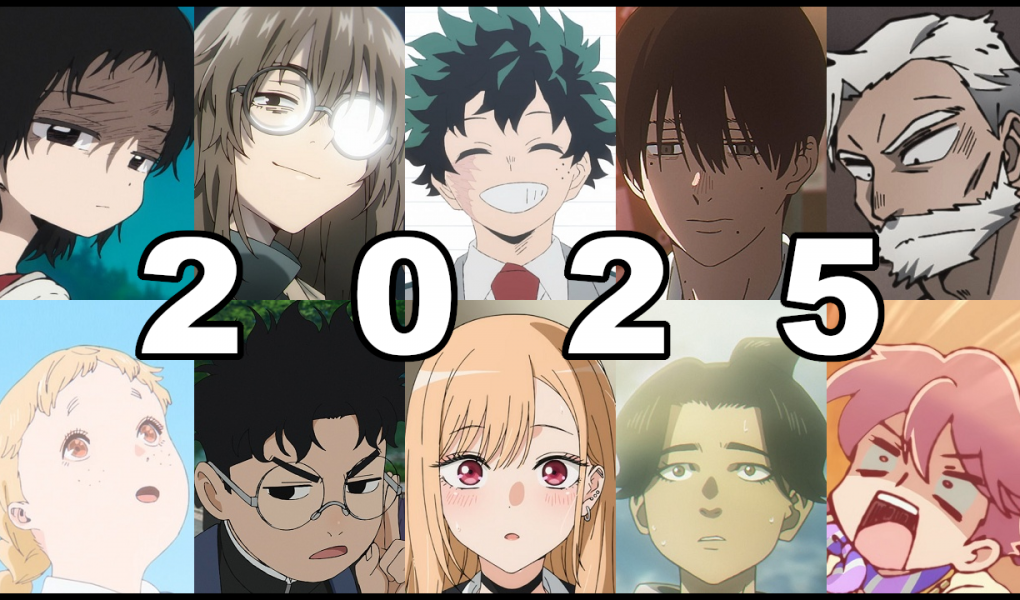
Mario: It’s amazing to think that we are more than halfway through this decade, and even though each of us writers is swamped with our current busy lives, here we are with another year of anime under our belts. As if to reflect the current anxiety of the real world, 2025 produced several shows with “Apocalypse” or “End of the World” in their titles or premises. We also received many sequels from heavy-hitting franchises, some of which we’ll be giving our thoughts on below. Anime that debuted this year didn’t fare too badly either, and surprise, surprise, isekai was still as popular as ever (though there’s not much of that after the jump). Come sit at our table where we voted, discussed, broke some ties, and delivered to you our thoughts on the state of anime in 2025.
Worst of the Worst
Worst Show: Towa no Yuugure
Wooper: Time for our yearly disclaimer: candidates for this award are limited to shows whose first three episodes we completed (at minimum). Series like GoHands’ visually ridiculous Momentary Lily or the year’s fantasy lolcow Bogus Skill Fruitmaster might be more fitting picks for the title of Worst Show, but we’re not masochists, so we didn’t progress beyond their premieres. Instead, this dubious honor goes to Towa no Yuugure (Dusk Beyond the End of the World), a post-apocalyptic adventure series that sidelined its adventure elements early on, shifting its focus to incest-driven angst and multipartner marriage proposals called “ehlsea.” Pretty much every romantic impulse in Yuugure’s story was misguided, including the late stage plot about artificial intelligence’s capacity for love. The costume design was haphazard, the villains were hambones, and the opening of the first episode was a blatant Breath of the Wild ripoff (naked hero awakens from suspended animation and ventures outdoors to reveal a cliffside vista). Put it all together and you have, if not the worst anime of the year, the worst one that I spent hours of my life on.
Runner-up: BYE BYE EARTH S2, for taking a show that already didn’t make much sense, but had that spark, and going even further off the deep end.
Biggest Disappointment:
Kowloon Generic Romance
Lenlo: Kowloon is an interesting one, because to be a disappointment, one must first actually expect something from the show. For instance, personally, I wasn’t disappointed in One Punch Man S3, because I never expected it to be good to begin with after S2. And when Kowloon first started, I was in love with it. The cramped, collapsing setting of Kowloon City, the mystery of missing memories and the budding, complicated romance of our two lead characters. It was fantastic! But as the season went on, as more characters and plot threads were introduced, it felt more and more like I was watching two different shows, as if Kowloon had no idea what it wanted to be and was struggling with its own identity, much like one of the leads. Every new idea or thread pushed what I enjoyed further and further from focus, until Kowloon became a show I could barely recognize from how it began. And while some may still have enjoyed where Kowloon ended up, as evidenced by its place further down this list, enough writers here found it to be a mistake, and as such, Kowloon has become our biggest disappointment for the year.
Runner-up: ONE PUNCH MAN S3, for trampling on the memory of one of the most beloved anime seasons in history through consistently poor writing and direction, lazy animation, and atrocious pacing.
Worst Character: Dr. Skinner (Lazarus)
Wooper: I figured Lazarus would be a shoo-in for one of the categories above, but we collectively picked enough tasty meat off its feeble bones to spare it that embarrassing fate. Unfortunately, the stench left behind by neuroscientist Dr. Skinner remains, as his MacGuffin-esque role in the series’ plot makes him the symbol of its larger failures. Most of Lazarus’s story involved a team of agents scouring the globe for Skinner, yet he was clearly visible at a homeless encampment visited by two of those agents in the show’s third episode, creating weekly frustration for viewers at their oversight. Toward the end of the series, we learned that he had received a heart transplant from a private clinic that had his telemetric data on file, but for some reason kept it to themselves while the world burned around them. And when the plot finally circled back to the homeless encampment in the last episode, the doctor’s rationale for potentially exterminating the human race turned out to be even more pitiful than his subsequent death. As far as extinction-level master plans go, Skinner’s was terribly undercooked – let’s hope his real world equivalent, should one emerge in the future, is just as inept.
Runner-up: SUNG JINWOO (Solo Leveling S2), for somehow making aura farming dull and monotonous.
General Categories
Best First Episode: Sanda
Mario: Sanda literally begins with the teenage boy from its title nearly being stabbed by a classmate, and it only gets weirder and more madcap from there. Based on a manga by Paru Itagaki (who is also responsible for my personal favorite Beastars), Sanda rides on the idea that its protagonist is a descendant of the boundlessly powerful Santa Claus. This first episode fully commits to that ridiculous idea with gorgeous animation, distinctive characters, and an explosive plot. Oh, and that classmate who tries to stab the show’s namesake in the first scene? She actually manages it before the episode is through. This premiere might be too bold for some viewers, but it was certainly the most unforgettable one this year had to offer.
Runner-up: THE SUMMER HIKARU DIED, for funneling psychological horror, queer tension and grief into something raw and unsettling.
Best Single Episode:
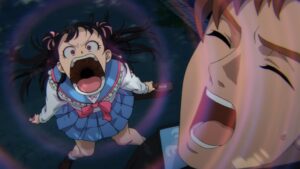
Takopi’s Original Sin #4
Wooper: If I were to assemble the 30 best anime episodes of the year, I’d likely include all six installments of Takopi’s Original Sin on the list. Yet even for a show that uniformly strong, one of its episodes stood head and shoulders above the rest: its fourth, which restored the relationship between two unalike siblings in such euphoric fashion that it knocked the air out of my lungs on first watch. There will be more writing on Takopi as this post goes on, much of it centering on the series’ bleak outlook, and that’s one of its core aspects to be sure. But episode 4 offers a clear and crucial reprieve from that bleakness, as grade schooler Naoki is rescued from the brink of mental collapse by his brother Junya. After a full 15 minutes of desperation for his mother’s approval and hatred of his older sibling’s effortless social graces, it becomes clear that Naoki couldn’t have been saved by anyone else. The person he resented most in the world was also the only person on Earth who truly loved him, and Junya shattered that barrier of loneliness with stars in his eyes – stars that would later appear in Naoki’s own visage, indicating the radical way his brother’s love had changed him. Maybe it’s because I have a younger brother myself, but this is one of the only episodes of the decade so far that I can honestly say changed the way I see the world.
Runner-up: APOCALYPSE HOTEL #11, for a nearly wordless episode that pondered on life, existence and purpose just by following Yachiyo on her day off work.
Best OP: “Mirage”
(Call of the Night S2)
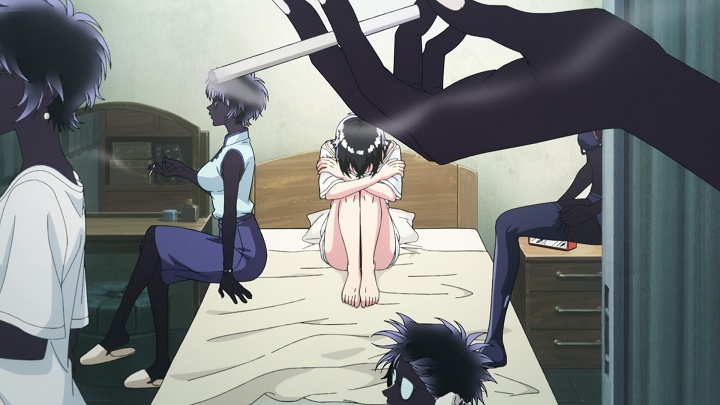
Amun: I’ll say it until I’m blue in the face, but Creepy Nuts and Call of the Night are a match made in heaven – and with “Mirage,” they delivered the best OP of the year. It’s a perfect fit for the show – late night vibes with a cool beat, mixed in with a rapped verse that gets more frantic the longer it goes. The video also deftly summarizes the season without spoiling a thing (surprisingly, the main action scene in the OP takes place in the detective Anko’s mind – it doesn’t actually happen in the show). The noir, greyscale tones reflect Anko’s state of mind throughout the season and gently remind the viewer of her backstory, providing excellent character reinforcement without taking up valuable screentime. The lighter motif as a central focus visually is also referenced in the lyrics – just a perfect match-up. I didn’t learn this until recently, but apparently Creepy Nuts was an inspiration for the original Call of the Night manga – the title was used with their permission (and the duo got a fun poolside cameo). Neat! Banger song for a banger anime season – “Mirage” gets Creepy Nuts some more well deserved hardware for Star Crossed’s “Best OP” of 2025.
Runner-up: “ADULT CHICK CHILDREN” (Sanda), for its stylish presentation and catchy song.
Best ED: “Lucky” (City the Animation)
Wooper: City the Animation is one of our more awarded shows of the year, despite (spoiler alert) not placing in our overall top 10. It’s simply impossible to deny the love that was put into its production, which blessedly extended to its big band opening and ending themes. What makes the ED particularly special is its simulated claymation style, which is so fun that even when it fills only half the frame, there’s always enough detail on screen to make you smile. As its zoological characters traverse their city streets (and the tunnels below), they circumvent roadblocks and dodge obstacles in charming fashion, eventually coming together to watch the sunset – a calming way to bid the viewer adieu after the show’s trademark craziness. That measured sentiment is also observed throughout “Lucky,” even as its smooth percussive beginning blooms into a brassy chorus. Singer Tomoo’s delivery remains rock-steady during that transition – she not only performed, but also composed this ED after reading the City manga, aiming to capture the whimsicality of the source material while maintaining her mellow vocal timbre. Based on the result, I’d say she and the band aced their assignment.
Runner-up: “I” (My Hero Academia: The Final Season), for allowing us to relive the last 10 years of My Hero Academia in a single ED.
Best Animation: City the Animation
Lenlo: Look, I’ll be the first to say that I don’t actually like City the Animation. Much like the author Keiichi Arawi’s other work, Nichijou, the humor just isn’t for me, I bounce right off of it. It’s because of this however that you can trust me when I say that City is an absolute marvel of animation. There’s no one thing, no shtick, this isn’t a shounen battle series where the only thing that looks good are the fights, almost everyone second of this show looks good. Even when it isn’t running through its beautifully rendered city streets akin to that one Levi clip from Attack on Titan, or delivering one of the best freeze frame opening transitions I’ve ever seen, it’s casually dropping expressive character animation that I can’t look away from. As I said, I detest City, I think it’s not funny in the slightest. But this is easily the best animated show of 2025, and I would be shocked if something in 2026 managed to one up it.
Runner-up: YAIBA: SAMURAI LEGEND, for awe-inspiring consistency across two cours of element-empowered swordsmanship.
Best Background Art:
City the Animation
Wooper: Anime background art tends to forgo the sort of linework used for character drawings, simultaneously giving precedence to the “actors” and creating the illusion that they exist within their softer backdrops. Some of the most harmonious fusions of character and background art over the years have involved softening both layers, as in the simulated watercolor style of Wandering Son. City the Animation reached a similar level of harmony, but rather than adapt its characters to their environment, it adapted its environment to its characters, utilizing the same thick lineart and ungraded colors for its nameless City as for its dozens of cartoon denizens. Looking at Keiichi Arawi’s hyper-detailed source material, you might conclude that its adaptation couldn’t have been produced any other way, but that would be underselling the level of interdepartmental synergy necessary to achieve this outcome. The show’s unpredictable comedic spirit required every prop to appear interactable, every city block to hold a dozen secrets, and every door to look as though it could get busted down at any moment. Somehow, KyoAni and their largely in-house art team pulled it off (with a little help from their frequent collaborators at Studio Blue). If only the show’s gags had been as funny as its backgrounds were meticulous, we’d have had an all-time comedy anime on our hands.
Runner-up: KOWLOON GENERIC ROMANCE, for a nostalgic and lived-in feeling that came from modeling its setting after the real Kowloon Walled City.
Best Soundtrack: (TIE)
Orb: On the Movements of the Earth
& The Summer Hikaru Died
Lenlo: What’s this, Kensuke Ushio once again composed one of the best anime OSTs of the year? And judging by his work on Journal with Witch, he’s probably doing it again for 2026 right now? I for one am shocked, shocked I tell you. Well okay, not that shocked. Fact is, Kensuke Ushio is a generational talent, and his work on Orb: On the Movements of the Earth is further proof of that. The way he conveys the wonder and awe the characters felt as they gazed up at the star-filled sky in “Thaumazein”, or the tranquil sound of “Hope” as they simply bask in the beauty of our world and the joy of being alive. Not to mention how he plays with religious sounds and motifs, integrating them into more modern tracks while making their influence clear. Suffice to say, Kensuke Ushio is one of those composers that, when I see their name on a staff list, I know that the show is going to sound good, if nothing else. And the man has once again delivered.
Wooper: Horror and anime just don’t mix – so the saying goes. The abstraction inherent to the animation process (which merely imitates reality, rather than seeming to reproduce it) can limit the immersion that fans experience when watching something that’s meant to be scary. But what if an anime took a different route toward achieving that fearsome effect? That’s what composer Tarou Umebayashi did with his score for The Summer Hikaru Died, enlisting eerie instruments like the glass armonica, dulcitone, and (naturally) violin to provoke periodic unease in his audience. Given the show’s numerous scenes of placid everyday life, the piano and woodwinds were given space to play as well, but even the former instrument got in on the suspense with discordant hits of its strings in tracks like “Premonition” (number 15 in the playlist above). Synths and percussion of all varieties, too, created an alien feeling to match the extradimensional origins of the parasite inhabiting the title character’s body. Listening to the soundtrack in isolation, it feels like a kitchen sink affair, but it’s hard to imagine a more successful approach given the ghostly context of its parent series.
Best Voice Actor: Kenjirou Tsuda
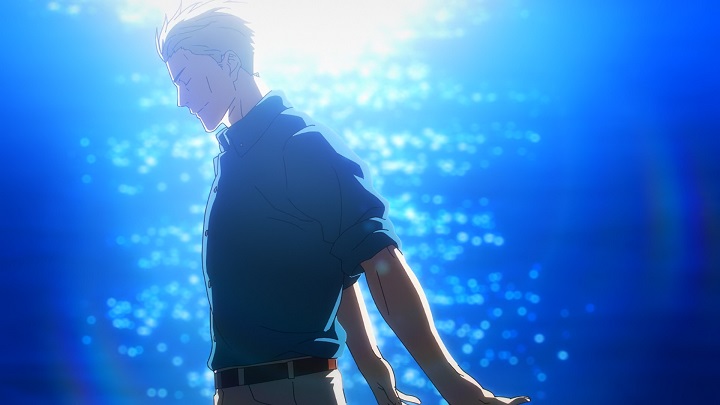
Lenlo: Let’s be honest here, every time modern Kenjirou Tsuda appears in an anime, he’s really just playing Kenjirou Tsuda. Ogata in Golden Kamuy? Sociopathic Kenjirou Tsuda. Nanami from Jujutsu Kaisen? Overworked salaryman Kenjirou Tsuda. Kishibe from Chainsaw Man, Kaidou from 100 Meters, Joker from Fire Force? It’s all just Kenjirou Tsuda doing almost the same voice every single time. But dear god does he nail it, every single time. No one can put as much texture or gravel, can deliver as much malice or daddy issues, as he can. And it’s not like Tsuda can’t emote either. While all slight variations on the same voice, he can still sell anger, joy, despair or awe just as well as anyone else. It’s just that Tsuda’s voice is so unique as to be instantly recognizable no matter the part. And while some may say that he’s simply giving the same performance every time, and so isn’t worthy of this win, I would say the fact that I look forward to and enjoy every time he opens his mouth, no matter the character, to be proof otherwise!
Runner-up: MINORI FUJIDERA (Flower and Asura), for her confidence and multi-layered recitations as part of her character’s high school broadcasting club.
Best Character: Yachiyo
(Apocalypse Hotel)
Mario: It’s kind of funny when you consider that the most human character anime had to offer this year took the form of a robot. Yachiyo is a mechanical hotel manager who just wants to keep her place of business going until humanity comes back to Earth, be it in a decade, a few hundred years, or… never at all. Despite all that, Yachiyo’s purpose is unwavering – she chooses to believe that her role still matters, even when there is no audience whatsoever. Throughout the passage of time that spans thousands of years, her resilience is expressed through routine, through the simple act of keeping the lights on and ticking all the checkboxes. Yet beneath her programmed hospitality lie profoundly human traits: longing, curiosity, and a fragile but persistent faith that a human may someday walk through her hotel doors. In the course of the series, she questions her own purpose and hopeful outlook multiple times, and that struggle is something we, the human, can relate and respond to very well.
Runner-up: YUKI OSANAI (Shoushimin Series S2), for bringing a complex, morally ambiguous character to life with subtlety and nuance.
Best Cast: Takopi’s Original Sin
Mario: With only four main characters in its cast, Takopi’s Original Sin wins this award based on how closely the show explores each of them within their dire personal circumstances. Bullying, abuse, child suicide… every time the show crushes these characters, it must undertake the difficult work of dragging them back on their feet. We get sucked into their darkened mindsets, and wonder whether they’ll ever truly be able to stand under their own power. Thankfully, all four protagonists undergo a huge transformation by the end of this series’ run, and they all learn a thing or two, especially about how friendship can ease the suffering of the misfortunate.
Runner-up: DR. STONE: SCIENCE FUTURE, for somehow perpetually growing a cast over four seasons, yet never leaving any of them behind.
Genre & Format
Best Comedy: Panty & Stocking S2
Wooper: Upon its dub’s release in the early 2010s, Panty & Stocking became one of the few anime capable of convincing original language purists (myself included) to come down from our high horses and enjoy some good old English voice acting. So when the news broke over a decade later that the original English cast would be replaced, concerns arose as to the new dub’s comedic viability. I can’t speak for everyone, but personally, my doubts were eased as early as this sequel’s first episode, then eliminated altogether by its sustained barrage of raunchy one-liners and over-the-top ghostbusting scenes. Contempt dripped from Panty and Stocking’s voices as they mocked not only their reformed demonic counterparts (Scanty and Kneesocks), but also newcomers Polyester and Polyurethane, whose exaggerated Gen Z slang became one of the show’s most reliably humorous angles. Season 2 also scaled up its pop culture parodies in both frequency and variety, lampooning properties including Magic: The Gathering, Being John Malkovich, and Beach Boys (the 1997 J-drama). But the sequel’s crown jewel was its loving homage to classic Marvel comics and their TV adaptations, complete with cheap-looking animation and poorly-synced lip flaps. No other comedy this year could match Panty & Stocking’s combination of lewd laughs and elaborate set pieces, so I can only hope that it returns in 2040 to win this award once again.
Runner-up: CITY THE ANIMATION, for many unpredictable skits with acute comedic timing, coupled with industry-leading animation.
Best Drama: Takopi’s Original Sin
Mario: Boy, you know that you’re watching something serious the moment you read the first episode’s content warning, but still nothing could have prepared me for what was to come with Takopi’s Original Sin. I am a massive fan of Shuzo Oshimi’s Flowers of Evil and Inio Asano’s Goodnight Punpun, and even then I regard Takopi as a stronger series than these two. First, it balances its dark, nihilistic outlook with Takopi’s overwhelming positivity and a sense of hope at the end of the tunnel. Second, the show makes no mistake that these kids, as broken as they are and as awful as they can be, are all direct victims of negligence and emotional abuse from their parents. Kids try to make sense of their own messed up worlds in the only ways they know how, and Takopi does too – his slow realisation of his own naivety represents a massive leap for his character. It’s a show that is so well done that it leaves you exhausted, and stays under your skin for months to come.
Runner-up: SHOUSHIMIN SERIES S2, for turning mundane high school days into compelling stories that tackled difficult issues and kept the viewer guessing with every episode.
Best Action: Lazarus
Wooper: If there’s one thing you can expect from Shinichiro Watanabe, it’s that he’ll leverage his industry connections to create the best possible animation for his TV series. Lazarus’s story turned out to be something of a disaster, but its action scenes were just the opposite, approaching their impossible choreography from a realistic angle that made them even cooler in execution than in concept. Even if they haven’t seen the show, many anime fans will have seen protagonist Axel’s death-defying parkour moves from its trailer. That was just a taste of what would follow, however, including a thrilling escape from a burning oil rig, a man shooting down a helicopter while hanging from a winged drone, and elite hand-to-hand combat in nearly every episode. There was even a classic four-on-one elevator fight scene drawn in decidedly non-classical fashion, deliberately reducing its in-between frame count to highlight its underdog’s positional dominance. But Lazarus’s crown jewel has to be this gruesome sequence where a knife-wielding assassin slaughtered an entire black ops squad in an abandoned housing project. No speeches, no superpowers, just precise, brutal movement (and a bit of jazz at the end, of course).
Runner-up: SOLO LEVELING S2, for spawning a global franchise from action and hype alone (despite the most straightforward plot ever).
Best Original Show: Zenshuu
Mario: Zenshuu feels like a series created by anime fans, for anime fans. It has such a deep love for the medium in general, and for all the forgotten series and movies that its creators grew up with. The protagonist is a gifted animator who gets transported into the world of a classic anime film she used to love, and uses that gift as a superpower to aid its characters, creating wild crossovers in the process. It’s a fascinating take on the modern isekai trend, and it offers heaps of metacommentary on that genre’s tropes. The animation also cleverly shifts styles to reflect the mental state of its heroine. Ambitious and self-aware, Zenshu blends audience appeal with genuine emotional stakes. It’s a love letter to animation – both its iconic characters and the medium as a whole.
Runner-up: APOCALYPSE HOTEL, for the wide range of moods it captured on its barren yet beautiful version of planet Earth.
Best Movie: The Colors Within
Wooper: Naoko Yamada is one of the few active directors whose name makes me sit up and take notice of whatever it’s attached to. While her work doesn’t always appeal to me on a deep wavelength, there’s no one else on her level in terms of compositing, and her color design is brilliant, as well. Given its title, then, it’s fitting that The Colors Within would showcase those strengths, carefully selecting warm shades of blue and brown and building shots (and sometimes entire scenes) around them. Depending on the mood of its teenage characters, all of whom spend the movie seeking self-understanding through music, those shades are brightened and darkened, softened and sharpened. In the climactic scene, an uninterrupted ten minute concert put on by the story’s primary trio, a mock stained glass painting serves as a radiant backdrop for their fulfilled ambitions. The music is great fun, too – watch a snippet of the kids’ performance here before it’s taken down! Even if the film’s synesthesic premise doesn’t amount to much, its fabulous production alone makes it a worthy entry in the filmography of one of anime’s foremost auteurs.
Runner-up: 100 METERS, for condensing a lifetime of effort and struggle into just 10 seconds.
Honorable Mentions
Mario: The Apothecary Diaries S2
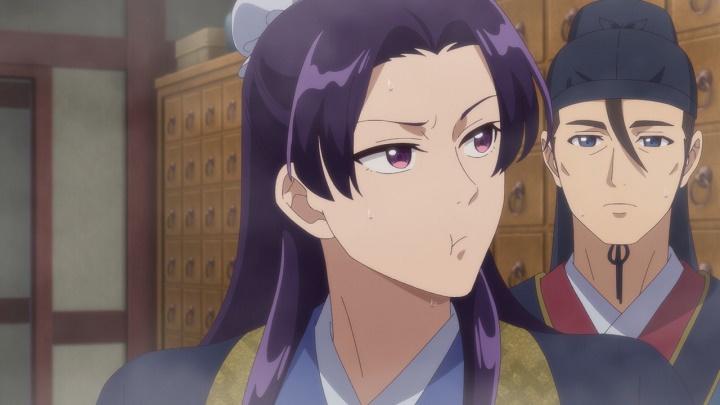
I dropped the first season of The Apothecary Diaries several years ago, but after picking it back up in the last quarter of 2025, I made it all the way to the end of season 2, and it was such a breeze the entire watch. That says something about this show’s knack for creating and solving mysteries, all while keeping us invested in its bigger picture. While I still have some issues with Apothecary Diaries in general – namely the uneven pacing and the unnecessary romantic tension (or the lack thereof) between Maomao and Jinshi – this new season is undoubtedly stronger than the first. The new cast members are much more well-written and memorable this time around, some of whom are just as interesting as our Maomao. This season isn’t afraid to go to dark places (the ugly truth about the old Emperor, for example) that will undoubtedly split its fanbase, but I am all for it. Finally, this sequel has a grander and more epic climax than the original, marking another step up from the first season. With a new chapter coming at the end of 2026, I have no doubt that The Apothecary Diaries will remain on my anime radar for a long while.
Lenlo: Medalist
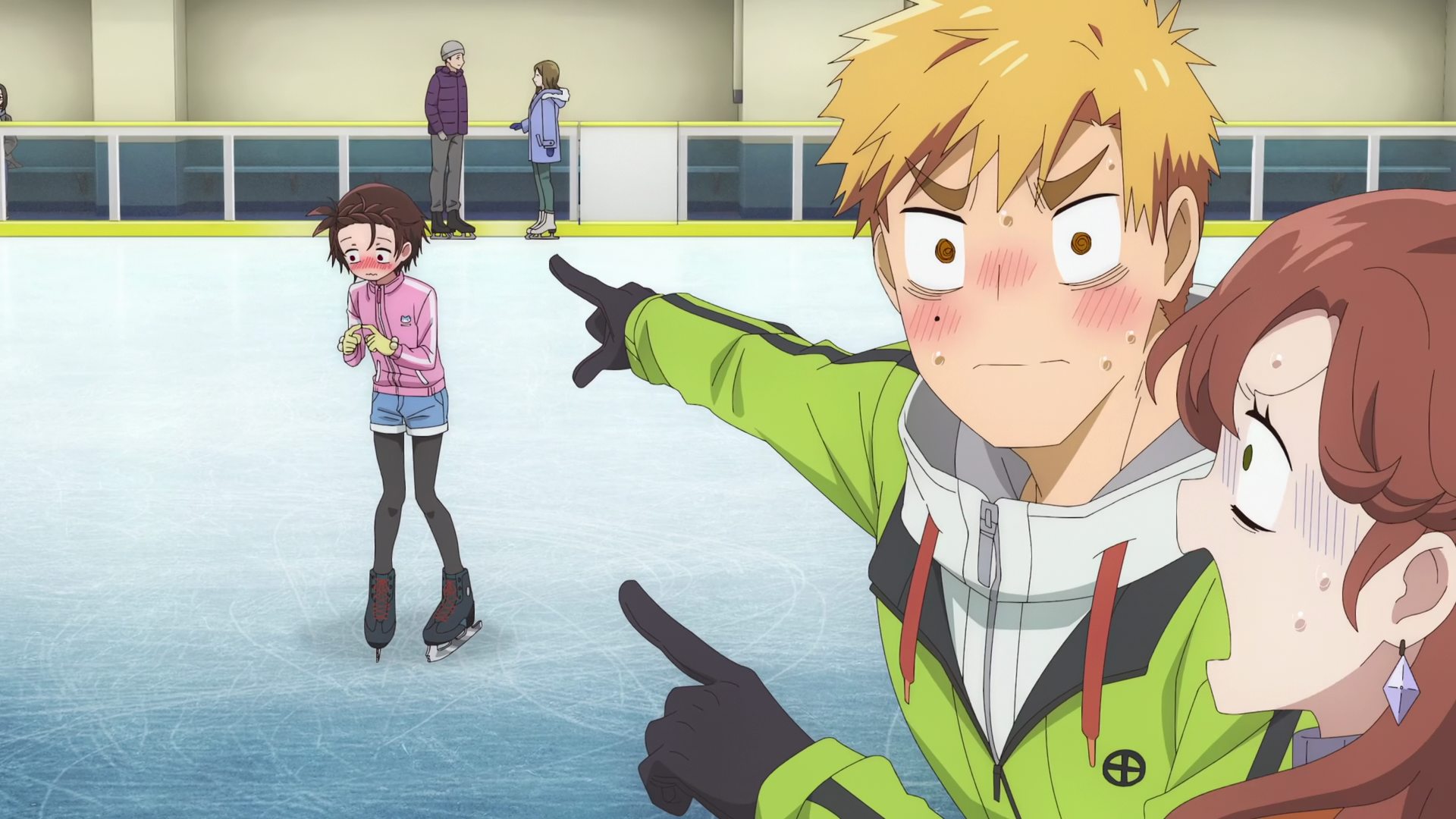
10 years ago, Yuri on Ice took the anime world by storm, forcing its way to the center of attention. And yet, for all of its numerous awards, I was never able to really get into it. Something about Yuri on Ice felt more like a romance shoved into a figure skating story, rather than a real figure skating anime, since it never really got into the weeds of how the sport worked. Well that’s where Medalist, one of my favorite shows from last year (with a second season airing right now) differs. It tackles the sport from the perspective of a complete novice, for both skater and coach, teaching us figure skating from the ground up as they journey through the basics and into the national scene. As a competitive sports anime, it hits just as hard as any male-led high school series, and as a coming-of-age story, watching Inori come into her own and pursue something she truly loves has been an absolute joy. The worst thing I can say about Medalist is how the CGI skating occasionally feels stilted and ugly, but even that gets improved on as the series goes on, until it’s able to deliver stunning performances beyond anything I could have hoped for. If you enjoy figure skating in any way, Medalist is for you.
Wooper: Cocoon
As an adaptation of a World War II-themed josei manga with a team assembled by former Ghibli animation producer Hitomi Tateno, Cocoon had been one of my most anticipated works since its announcement nearly three years ago. Of course, not every prestigious anime project pans out, which is why I’m so appreciative that this one did, especially since it’s based on the true story of Japan’s Himeyuri students. The film’s reverence for nature and plentiful character animation establish an idyllic beginning, but it doesn’t take long for doubt to creep in, and then despair. Pivoting on a metaphor of silkworms boiled alive after serving their purpose, Cocoon mourns the senseless death of more than 200 makeshift nurses who lacked the wings to obey their government’s orders and “go home” as U.S. troops advanced through Okinawa. Abstractions such as flower petals taking the place of blood and a swift cut away from an attempted rape made the movie suitable for a broader audience, but despite these tasteful decisions and a closing message of survival, the horror of the girls’ ultimate fate was chilling. I’m glad that Cocoon was able to fill this hole in my American-slanted WWII education, and I fervently hope that similar anti-war animation continues to be produced the world over.
Top 10 Anime of 2025
Here’s a link to our individual ballots, so you can see how we settled on these ten shows in this particular order. Let’s go!
10. Kowloon Generic Romance
Mario: Yep, you read that right! Our “Biggest Disappointment” of this year is the same show that claims the number 10 slot on our collective ranking. I’m the one to blame for that, as I put it all the way up at number two on my ballot, but I am here to defend it if you’re willing to hear my case. Based on a manga by the author of After the Rain, Kowloon Generic Romance is far more ambitious and narratively complex than that series’ Yokohama. First, Kowloon Walled City is practically a character on its own, frozen in time yet full of hidden histories, along with a deep sense of nostalgia and intimacy. The show also stands out for its emotional ambiguity, questioning whether the past is powerful enough to keep present relationships from flourishing. The sci-fi mystery elements never overpower the romance, but deepen it instead. Some might disagree on that last point, or criticize the psychological ending, but for me it wrapped up the story of Kujirai A and B in perfect fashion.
9. Call of the Night S2
Amun: Call of the Night is one of my absolute favorite live franchises at the moment. The night-time vibes, the restlessness, and the hint of danger tempered with the promise of immortality all come together in a beautiful, messy masterpiece. Plus the music is top tier – Creepy Nuts always seems to show up for this series! Season 2 saw a heavier focus on our favorite vampire-hunting detective who we met briefly in season one. Normally, when sophomore seasons introduce additional characters, my interest declines, but Call of the Night’s Anko is anything but uninteresting. The climax of her arc had me on the edge of my seat the entire time – even its aftermath reminded me of MHA’s Gentle arc (in terms of restarting life). The continued efforts of Ko Yamori to become a vampire will have me watching for as long as it takes him to achieve his goal!
8. The Summer Hikaru Died
Wooper: Much like the specters that haunt its countryside setting, Hikaru ga Shinda Natsu’s place in the pantheon of horror anime is presently in limbo. We’ll have to wait until its far-off second season for resolutions to its many dangling plot threads, but as far as 2025 goes, it was surely one of the strangest and most atmospheric series that aired all year. Images of long-necked phantoms, severed heads, and towering columns of brain matter were paired with overexposed lighting and glitchy scene transitions to create an arresting directorial style. From there, the show’s sound design took things to the next level, isolating its protagonists in spite of their childhood bond and adding aural texture to the crossing of spirits between worlds. The one-sided same-sex attraction between the lead characters was thoughtfully presented, as well – far from being included for audience appeal, the series paralleled its supernatural elements with the alien experience of being gay in a small town, then complicated those feelings with grief and even violence. A lore-heavy string of episodes toward the end of this first season did soften its overall impact, but I’m confident I’ll still be looking forward to the second when it arrives later this decade.
7. My Dress-Up Darling S2
Amun: My Dress-Up Darling is not that serious of a show. The budding romance between the cosplayer and the cosplay maker follows the typical “will they, won’t they” arc while meeting some new friends along the way. Of course, Marin does Marin things and looks great doing them, but she’s so endearing and cheerful that you can’t help but cheer along. Some interesting topics of body image, off-the-shelf cosplay, and parental approval of hobbies all are present this season (plus a rather psychological/horror game as the centerpiece – that wasn’t my favorite). Probably the best moment of the show was the convenience store misunderstanding, which had me in stitches – falling asleep and skipping over any awkwardness entirely was also hilarious (and quite believable). In the end…no major relationship progress was made at all, but we all had fun not making it! Am I coming back for the eventual season 3? You better believe it!
6. Dandadan S2
Amun: I just realized that every single show I’ve written about for this AOTY post is a sequel – Dandadan S2 is no exception! After last season’s awkward cliffhanger, Dandadan got underway with tons of action that sort of made sense if you tilted your head and squinted. The opening arc turned out to be a setup to get a new character into Hot Granny’s household (not to be confused with Turbo Granny), with all the relational complications that accompany that development. Oh yeah, and blowing up the entire house as well, forgot about that. More supernatural hijinks occur, and the cast grows slightly (which wasn’t my favorite change, but time will tell). The real centerpiece of the show – Momo and Okarun’s relationship – grew at a glacial pace, but there was some slight progress! The supporting cast continues to be stellar, the animation absolute top tier, and the story wacky and fun. Dandadan is my up and coming franchise to watch, and rightfully earns its place on the illustrious Star Crossed Top 10 anime of 2025.
5. My Hero Academia:
The Final Season
Lenlo: It’s been 10 years since My Hero Academia first aired, and 12 since it first saw print in Weekly Shonen Jump. In that time it’s had 42 volumes, 14 cours, 4 movies, 3 directors, and a whole host of talented animators, artists, musicians, and voice actors. Whatever your thoughts on the series, My Hero Academia has been a cornerstone of seasonal anime, giving us incredible fights, character moments and stories. As a fan, this last season in particular gave me most everything I wanted. The battles were the best they’ve ever been, character arcs were completed, and we even got some of the additional epilogue content animated that I wasn’t expecting. Was it perfect? No, the series probably could have slowed down on the path to get here. But as far as this specific season goes, as a fan, I don’t think I could have asked for a better way for the series to go out. So while for some people this will just be another season of My Hero Academia, for me and many others, this is the end of an era.
4. Orb: On the Movements
of the Earth
Lenlo: Ah Orb, my personal Anime of the Year. Would that I had an entire review’s worth of space to gush about it. From the beautiful night skies and OST (which I wrote about elsewhere in this very post), to the engaging and thought provoking exploration of the human spirit and our unwavering pursuit of truth in this messy, wild world. Originally created by Uoto (the same author who wrote 100 Meters), Orb managed to strike the same chord in me that series like Planetes or Fune wo Amu did, focusing more on the human experience than any single character or overarching story. Simultaneously hopeful and realistic, Orb shows us what happens when new ideas challenge the status quo, and how they persist and grow and spread despite those on high fighting to scrub them from existence. Orb isn’t about religion vs science, or faith vs logic, or any of the other inane r/Atheist bullshit I’ve seen passed around. It’s about when those in power, those who profit from the lies and division, will us to move, to bend, and the best of us say no.
3. Apocalypse Hotel
Mario: Now on to a show that came almost out of nowhere and hit us like thunder. Apocalypse Hotel turns the “end of the world” concept into a funny but unexpectedly tender meditation on life – what it means to hold onto one’s purpose when the world no longer demands it – and the ability to move on. The whole cast, including the concierge Yachiyo (winner of our Best Character award) and her staff, are charming and totally likeable as they manage to keep their hotel ready, even though it hasn’t had a single guest in a long time. The show has lots of ways to flesh out that concept, from finally welcoming nonhuman guests to exploring the passage of time, as the staff are the only constant characters against their changing world. But what makes Apocalypse Hotel so complete is its restraint. Rather than fully leaning into chaos or spectacle, it embraces stillness. It features an entire episode where Yachiyo takes a day off and wanders around the city, with animation that lingers on small details to create a contemplative rhythm. And the writing quality remains consistent for most of its run, which is especially noteworthy for a series with no source material. Hopefully we get another original show this good in 2026.
2. Sanda
Lenlo: Paru Itagaki, daughter of Keisuke Itagaki of Baki fame, is without a doubt one of the weirdest new generation mangaka in my mind. Her first work, Beastars, was a long furry fable about sexual desire and race relations. Now her next work, or next one to get an anime adaptation at least, is about how adults control and mold children to fill holes in their own lives, and how our obsession with children’s lifestyles only harms them. Sanda is just as weird as Beastars was, but for me it works so much better. I love the sharp, lanky character designs, the way it weaves traditional Christmas melodies and sounds into its OST, how it neither shies away from the weird, hormone-fueled existence that is being a teenager, nor overtly sexualizes its cast in any way. In Beastars, it was obvious that Paru had this obsession with exploring sexuality and intimate relationships, but there it got overshadowed by the weirdness of the setting and the in-your-face rape allegory. In Sanda, the same fixation is there, but it’s much more restrained and respectful in how it explores it. Watching this show, I feel like I’m seeing Paru’s evolution as a storyteller. And when combined with Science Saru’s production, I can’t help but love it.
1. Takopi’s Original Sin
Wooper: Last year, a grim sci-fi series involving aliens and time travel came up just short of our overall number one spot; this year, an anime fitting the exact same description managed to claim the crown. But where Dead Dead Demon’s Dededede Destruction was sprawling, featuring dozens of characters and turning its lens toward wider societal issues, Takopi’s Original Sin took the opposite tack, using nearly every second of its six episode run to build out the evolving trauma of its miniature cast. There were very few hopeful moments in its story of parental neglect, vengeful bullying, and suicide, with the show’s most optimistic character portrayed as naive at best and culpable for the others’ misery at worst. It was a draining, spiritually exhausting watch – and at the same time, its brief instances of brotherly connection and personal sacrifice soared above that despair. Takopi’s message is clear: if you know someone who’s suffering, you should neither avert your eyes nor presume to act as their savior. Instead, offer them a helping hand and a listening ear, and never lose sight of your common humanity, even when theirs is buried under a generation’s worth of pain.
The post 2025 Anime Awards and Top 10 List appeared first on Star Crossed Anime.