
Wooper: Having been pummeled with multiple snowstorms this past winter, I’ve been ready for spring’s arrival for a while now – and not only as a reprieve from the weather, as series after exciting series have converged to make this one of my most anticipated seasons since I began writing for Star Crossed. The headliners include a two cour adaptation of Hiromu Arakawa’s new series, a pair of fourth seasons for two isekai stalwarts (not covered here, though they hardly need the help), and the long-awaited final entrant in modern fantasy manga’s Big Three. What’s most interesting about this spring, though, is its wide range of second tier shows, which pull from classic comics about wine tasting and financial mind games, as well as next gen works about rakugo and graffiti. Both veteran directors and young hopefuls are represented in the preview below, which has me feeling uncommonly optimistic about the state of anime. Will enough of our picks pan out to justify that enthusiasm? First Impressions are just over a week away, so we’ll find out soon enough!
Middling Expectations
Agents of the Four Seasons:
Dance of Spring
Studio: Wit
Director: Ken Yamamoto
Series composition: Ayumu Hisao
Source: Light novel
The Premise: The Agent of Spring and her trusted guardian embark on a journey to usher in Yamato’s first spring in ten years.
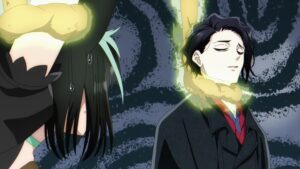
I typically avoid using series’ in-universe terminology when summarizing their premises, but there’s no way to do that for Agents of the Four Seasons, a modern fantasy with a plot entirely defined by its worldbuilding. There’s a creation myth setup, with a personified Winter creating Spring, Summer and Autumn, each of whom grant their power to humans called Agents (hence the title), who usher in their respective seasons through song and dance. This sounded pretty good to me until I honed in on the “modern” in modern fantasy – the technology here is so contemporary that the PV features a fight scene set at an airfield. I can’t really envision a story this folkloric taking place in a world with central heating, but I’ll still give Agents a shot, as it’s directed by Ken Yamamoto, who demonstrated a mastery of winter scenery in his Pokemon short series “Hisuian Snow.” The major selling point for most people here will be the author of the source material: Kana Akatsuki, who also wrote Violet Evergarden. I wasn’t a big fan of that show, but this is a separate work by a different creative team, so it may offer some surprises.
Dandelion
Studio: Naz
Director: Daisuke Mataga
Series composition: Yousuke Suzuki
Source: Manga
The Premise: Two agents working for the Japan Angel Federation coax regretful souls to move on to the next life.
There’s still no PV available for Dandelion as of March 23 (despite its promised April premiere), which doesn’t strike me as a good sign, but I like the idea behind the series: expanding a one-shot manga about a pair of irreverent “angels” into a seven episode miniseries. The one-shot in question is the debut work of Gintama author Hideaki Sorachi, and his juvenile sense of humor was all over its 30 pages when I made my way through them for this preview. There were a couple fun gags toward Dandelion’s beginning, but rather than the comedic hit-to-miss ratio, it’s the “ushering earthbound souls to heaven” concept that I think will benefit from being fleshed out. Seven episodes likely means seven different souls in need of Tetsuo and Misaki’s unwelcome assistance, rather than the solitary spirit from the manga, giving the series more angles from which to attack its supernatural premise. I wasn’t able to find any information on Sorachi’s involvement in the writing process, so let’s hope relatively new series composer Yousuke Suzuki can turn this modest one-shot into something memorable.
Drops of God
Studio: Satelight
Director: Kenji Itoso
Series composition: Yuu Mitsuru
Source: Manga
The Premise: The son of a deceased wine critic must compete in an elaborate competition to inherit his estranged father’s estate.
Everything I know about Drops of God (Kami no Shizuku) comes from an encounter I had with a middle-aged woman at an anime convention 15 years ago. She was a fan of the manga, which would have been in the middle of its serialization back then, and went to great pains to assure me of its “qualities,” perhaps adopting the vocabulary of a sommelier to describe just such a story. As I recall, my outward response was polite, but inwardly I was wondering how I’d gotten myself stuck in this conversation. Flash forward a decade and a half and I’m closer to her age from that time than my own, so even though I’m no wine connoisseur, I might be more receptive to what Drops of God has to offer. Or perhaps I ought to say “might have been more receptive,” as there’s no way I’ll be following this show – the animation showcased in the PV is only one step removed from motion comic level, and the lack of recognizable staff points to the production company automatically handing the series to the lowest bidder. It’s not all bad for Kami no Shizuku fans, as they have two live action adaptations to choose from – just steer clear of the anime if you remotely value visual presentation.
Ganbare, Nakamura-kun!
Studio: Drive
Director: Aoi Umeki
Series composition: Yasuko Aoki
Source: Manga
The Premise: A timid teenage boy repeatedly tries and fails to make friends with his high school crush.
How many more “Social Anxiety the Animation” works will we get before it reverts from all-encompassing premise to occasional character trait? At least one, as Ganbare Nakamura-kun (“Go for It, Nakamura”) will be offering a BL spin on the subject next month. The source manga and its sequel ran for just one volume each, so I’m not expecting anything heavy from this show – just the humor (assuming it manages to amuse) of the protagonist’s unrealized attempts to befriend the floofy-haired boy he likes. This show was originally slated to air in the spring of 2025, and while I’m not aware of the reason for the delay, it seems to have paid off visually, as the PV’s 80s character designs look great in motion. That throwback style is the primary reason I’m interested in Nakamura-kun, which is an admittedly flimsy rationale, so here’s another tidbit: director Aoi Umeki is primarily known for her work on anime openings and endings (Pop Team Epic, Yuru Camp, Dress-Up Darling), so I’m interested in how that experience will translate to leading a full length TV series.
Kamiina Botan,
Yoeru Sugata wa Yuri no Hana
Studio: Soigne
Director: Takashi Sakuma
Series composition: Youko Yonaiyama
Source: Manga
The Premise: A college student becomes drinking buddies with her dorm supervisor after trying alcohol for the first time.
This isn’t the first anime about girls drinking (Takunomi beat it to the punch by nearly a decade) but Kamiina Botan looks to be more character-focused than its predecessor. It’s a full length production, for one thing, plus its college setting and light romance element should make it more than just a hangout show. It’s still a glorified ad for the Japanese alcohol industry, of course, but we’ve gotten anime in the past that have excelled in spite of overt shilling. Tsuki ga Kirei (LINE) is an obvious one, and though I didn’t finish Super Cub, its patient presentation was a nice surprise. Anyway, it’s not as though I expect the world from Kamiina Botan’s story – at least half the reason I’m interested is the digital painting used for its key art, which we saw in motion in its first (but not its most recent) PV. That kind of style is far too detailed to use on the regular, so I’m guessing it’ll be reserved for one sequence per episode, or maybe it’ll feature in the show’s multiple EDs (six of which are being personally overseen by its character designer). Assuming Kamiina Botan has more endurance than studio Soigne’s last project (Mono), I may follow it for a full cour, but it’s not at the top of my list.
Kujima Utaeba Ie Hororo
Studio: Hibari
Directors: Shinichiro Kimura, Noriyuki Nomata
Series composition: Yasunori Yamada
Source: Manga
The Premise: A middle school boy makes the acquaintance of a flightless humanoid bird, who begins freeloading at his family’s house.
One of the benefits of writing nonhuman characters is that audiences won’t have the same expectations for them as for Homo sapiens. This allows writers to dip into surreal territory while keeping the rest of their work grounded, which seems to have been the game plan for Kujima Utaeba Ie Hororo, a lesser-known comedy manga that I sampled to see what the tone of its upcoming adaptation might be. Kujima is a humanoid bird (likely modeled on the Recurvirostra avosetta) who speaks Russian, loves Japanese food, and begins each day by finding a quiet place to squawk at the top of his lungs – his biggest, and perhaps only, avian tendency. His peculiarities endear him to every member of his host family but the oldest son, whose failed entrance exams are a sticking point in the story. I didn’t read far enough for the two of them to form a proper friendship, but I’m sure the author intended Kujima’s strange habits and childlike naivete as an antidote against the rigors of academic life in Japan. This show doesn’t have a promising PV or a strong staff list, but its weirdly carefree atmosphere could help it overcome its visual shortcomings.
Liar Game
Studio: Madhouse
Director: Yuuzou Satou, Asami Kawano
Series composition: Tatsuhiko Urahata
Source: Manga
The Premise: A naive college student teams up with a brilliant con man to seek victory in a twisted finance-themed survival game.
This is the second season in a row where a manga with a famous J-drama adaptation is getting an anime – last winter it was Hana-Kimi, and this spring it’ll be Liar Game. I have a vague memory of watching the drama’s first episode over a decade ago, but I never moved on to the second, and the likelihood that I’ll repeat that pattern with the anime is high, as it’s being handled by Madhouse’s lowest tier production line. Chief director Yuuzou Satou may have adapted thrillers like Kaiji and One Outs (also by mangaka Shinobu Kaitani) in the past, but his style hasn’t evolved in two decades, so his experience with psychological thrillers may not be sufficient to put Liar Game on the same level as its other incarnations. The hook of a beautiful young woman receiving a suitcase containing 100 million yen will be irresistible for some, but the chintzy PV makes the show look like it was produced for a smaller figure than that. Still, Satou’s old school approach worked for some fans on the recent Trillion Game, and the source material is evergreen, so it’s not as though there’s zero hope here.
MAO
Studio: Sunrise
Director: Teruo Satou
Series composition: Yuuko Kakihara
Source: Manga
The Premise: A teenage girl is transported to early 20th century Japan, where she teams up with a cursed onmyouji to learn the reason for her sudden supernatural abilities.
Rumiko Takahashi has never been shy about cashing in on Inuyasha’s massive popularity. In 2020 the series received an anime original spinoff (Yashahime) starring Sesshomaru and Rin’s twin daughters, and now her ongoing manga MAO (also known as “Inuyasha at home”) is coming to the small screen as well. It has a similar ‘15 year old girl gets sucked into the past’ setup, though the cute guy she meets there is a human cursed by a cat demon, rather than being half dog demon himself, as in Inuyasha. There will be action scenes (pretty good ones, if the PV is any indication), romance, angst, some slapstick comedy – everything you need to feed your early 2000s nostalgia. Director Teruo Satou even served as ED on around 20 episodes of the Inuyasha anime, though that experience didn’t stop Yashahime (which he also directed) from disappointing some longtime Takahashi heads. Personally, I’ve got no horse in this race, demonic or otherwise – I just figured it was worth mentioning that the queen of shounen manga was gaining another notch on her anime belt.
Marriagetoxin
Studio: Bones Film
Director: Motonobu Hori
Series composition: Kimiko Ueno
Source: Manga
The Premise: A murderous poison specialist takes dating advice from a cross-dressing marriage swindler.
When Shonen Jump+ struck gold with Spy x Family in 2019, publisher Shueisha predictably chased its success through similar ‘espionage and/or assassination’ works. Jump+’s parent magazine began running Mission: Yozakura Family just five months after SxF’s debut and Sakamoto Days a year after that, and in 2022 Jump+ ended up with a second hitman living a double life in Marriagetoxin. There are much worse trends in the animanga sphere, so I won’t balk at a series from this sub-subgenre, especially one animated by Bones Film. Speaking of that (renamed) studio, though, they appear to have assigned this show to one of their less powerful teams – likely the one that handled their 25th anniversary work Metallic Rouge (also directed by Motonobu Hori), which was a major flop. Marriagetoxin ought to be a safer bet than that show, if only due to the source material serving as a blueprint, but safety isn’t exactly what I want from a show about killers. It’s probably what we’ll get anyway, in spite of the premise’s blatant peculiarity, but I’ll endeavor to keep an open mind.
The Ramparts of Ice
Studio: Kai
Director: Mankyuu
Series composition: Yasuhiro Nakanishi
Source: Manga
The Premise: An aloof high school girl is drawn into a small group of friends, all of whom probably have crushes on one another.
I feel as though I can predict the shape of this show’s relationship chart just from the image above – the guy with the strange-looking backpack likes the girl in the foreground, the girl waving in the distance likes Backpack Guy, and the dark-haired boy likes Waving Girl. Another high school love polygon isn’t exactly what I’m clamoring for, but The Ramparts of Ice (Koori no Jouheki) is adapting the second Koucha Agasawa manga in as many seasons, and the first one (You and I Are Polar Opposites) turned out quite well, so I ought to give number two a shot. I wrote earlier about my fatigue of social anxiety in anime, but Ramparts’ heroine seems more awkward than anxious, so I’m expecting to give the show a pass, especially since Agasawa is adept at writing teenage dialogue. The choice of director is the most curious thing about this project – the mononymous Mankyuu came to prominence with Flash animated spinoffs of franchises like Idolmaster and Gundam, only recently transitioning to more traditional TV series. We’ll see how his alternative sensibilities impact this comparatively straightforward romantic comedy/drama.
Snowball Earth
Studio: Kai
Director: Munehisa Sakai
Series composition: Shigeru Murakoshi
Source: Manga
The Premise: A shy mecha pilot awakens from cryogenic sleep only to discover the Earth is even more frozen than he was.
Snowball Earth bears the nickname of our hypothesized second ice age, which is thought to have begun around 700 million years ago, but its story takes place in the near future, where Earth has somehow frozen over rather than burned down. Unfortunately for the series’ nervous hero, the planet plays host to both humans that want to talk to him and monsters that want to kill him, and unfortunately for the series’ audience, the animation is primarily 3DCG. I can understand that choice, since Snowball Earth contains both difficult-to-draw kaiju and a mech that looks like an egg with limbs, but the monsters in particular suffer from the decision, at least from what little the trailer showed. I don’t believe I’ve seen a 3D work from either studio Kai or director Sakai, the latter of whom resisted the temptation to use CG in his last series, Dance Dance Danseur (despite the precedent set by other dance-themed anime). That being the case, I’ve got no reason to get down on this adaptation ahead of time. If the mystery of the globe’s sudden chilliness overshadows the protagonist’s anxiety (again?), Snowball Earth might be one of the season’s better sci-fi offerings.
Shows We’re Anticipating
Akane-banashi
Studio: Zexcs
Director: Ayumu Watanabe
Series composition: Michihiro Tsuchiya
Source: Manga
The Premise: After receiving secret lessons for years, a teenage rakugo apprentice sets out to avenge her father’s expulsion from the art form.
Of all the Shonen Jump adaptations so far this decade, only Chainsaw Man had me as interested as this one in how its anime would turn out. I’m not a manga enthusiast, so that’s not the grand statement it seems to be, but it does mean something that a series with Akane-banashi’s subject matter runs in the most mainstream manga magazine in Japan. It’s also significant that such a big name director was selected to oversee its TV version, though the staff member I really want to highlight is Yasunari Nitta, one of the chief animation directors. Nitta is a character animation specialist who served major roles on studio Zexcs’ standout projects in the past (Fune wo Amu, Asagao to Kase-san), and given that rakugo is all about small scale movement, I’m expecting a lot from his episodes. Akane-banashi is still a story about getting stronger and defeating your rivals, so there ought to be screentone backgrounds and speedlines aplenty. But with such an old-fashioned performance art as its canvas, and such well-designed (and hopefully well-written) characters at its disposal, there’s potential here for a great long-running adaptation.
Candy Caries
Studio: Wit
Director: Tomoki Misato
Series composition: Chiaki Nishinaka
Source: Original
The Premise: A sweets-loving girl must contend with the selfish whims of an anthropomorphized cavity who lives in her mouth.
Any time there’s a new stop motion series about to be released in Japan, you can be sure it’ll appear in one of our previews. This time the show in question is Candy Caries, a new work from Tomoki Misato, though not in his usual style – Pui Pui Molcar and My Melody & Kuromi were both wool-based, while this one uses plastic that’s been designed to look like gelatin. Even if this marks a divergence from his professional work, he did employ the same candy aesthetic for one of his student films at Tokyo University of the Arts, so he may have been working toward this project ever since graduating. You can see the materials in action here, with a fashionable cavity character residing in (and occasionally emerging from) her host human’s mouth. I love the combination of the main character’s sweet tooth and the sugary art direction, so even if the series’ soundtrack is as dire as the PV suggests, this will be a day one watch for me when it makes its YouTube debut in mid-April.
Daemons of the Shadow Realm
Studio: Bones Film
Director: Masahiro Andou
Series composition: Noboru Takagi
Source: Manga
The Premise: A hunter’s peaceful life is disrupted when an assault on his village results in the awakening of his latent summoning ability.
In the autumn of 2003, the first Fullmetal Alchemist anime began with a limited amount of source material in reserve, airing weekly until it ran out of chapters to adapt, then making things up as it went along. Daemons of the Shadow Realm (Yomi no Tsugai) is based on a manga by the same author, but it’s not likely to follow the same path; FMA had 24 chapters out when its first anime began, while Daemons has 51. Pair that stockpile with a sturdy staff list and it’s easy to see why people are excited for this show – so why don’t I have it in the ‘Highest Expectations’ tier? This is just my gut talking, but Hiromu Arakawa packed so many concepts and themes into her first ‘save the world’ epic that Yomi no Tsugai will naturally retread some of that ground, and I don’t anticipate that being a great feeling. From its very first episode, it will be operating in the shadow of one (or even two) of the greatest shounen anime ever produced, so I’m keeping my hopes at a manageable level until Masahiro Andou and his team show us what they’ve got. But hey, if you’re a manga reader and you know for a fact that Daemons and FMA couldn’t be more different, don’t hesitate to let me know how wrong I am!
Eren the Southpaw
Studios: Production I.G, Signal MD
Director: Toshimasa Suzuki
Series composition: Taku Kishimoto
Source: Manga
The Premise: A frustrated ad agency designer and a renowned graffiti artist who met as teenagers push forward on their creative paths.
Of the five “Shows We’re Anticipating,” Eren the Southpaw (Hidarikiki no Eren) is the one I’m the most unsure about. On the one hand, it’s an ensemble drama with an adult cast, and one about artists and their personal processes (a fascination of mine) to boot. On the other, the PV is very plain-looking, to the point that I wouldn’t blame anyone for passing on it, especially when three other versions of the story are available (original webcomic, Jump+ manga, J-drama). I can see myself bouncing off the first episode if it’s anything like Arte or Smile Down the Runway – series about creative pursuits that lack the corresponding visual direction. This one’s title character is a graffitist, however, which comes with a rebellious spirit that may allow the show to turn that limitation into a weapon. Based on all the different people on the manga’s myriad volume covers, the story will cover a wide range of industries: painting, fashion, dance, and yes, advertising. That’s another reason that I want to give Eren the Southpaw a shot – I’m an advertising hater, so this could be a way to challenge my preconceptions about the field. And if the anime happens to shed any light on why Japanese ads are so damn weird, that’d be a fun bonus.
Scenes from Awajima
Studio: Madhouse
Director: Morio Asaka
Series composition: Yasuhiro Nakanishi
Source: Manga
The Premise: Aspiring actresses and musicians form friendships and rivalries at an all-girls performing arts boarding school.
Here’s one of the “veteran directors” I mentioned in the intro paragraph: Morio Asaka, who has been exercising his skill at adapting shoujo manga for 30 years now. Scenes from Awajima (Awajima Hyakkei) is a pure drama series, so his experience on Nana and Chihayafuru should come in handy, though he’ll be translating subtler source material this time around. The Awajima manga is by Takako Shimura, whose uncommonly delicate writing style (particularly when handling issues of gender and sexuality) will put even Asaka’s abilities to the test. He’s very good at incorporating music into his works, though, which makes him a good fit for a show set at a performing arts school – and not only is Asaka’s involvement a good sign, we’ve got one of the scriptwriters for Rakugo Shinjuu (one of the best-written anime of this century so far) on board, as well. Hopefully Nakanishi, who’s done series composition for a fair amount of dreck since then, will rise to the challenge posed by Awajima’s omnibus format. The PV’s pseudo-watercolor style isn’t as attractive as past Takako Shimura adaptations have been, and I’m not expecting more than mid-table animation here, but sure hands at the top of the staff list count for a lot in my book.
Highest Expectations
Dorohedoro S2
Studio: Mappa
Director: Yuuichirou Hayashi
Series composition: Hiroshi Seko
Source: Manga
The Premise: Caiman continues to search for the sorcerer who cursed him as the magical turf war between the Cross-Eyes and the En Family heats up.
After rumors that it might air in 2024 proved to be false, and an official release in 2025 went unrealized, Dorohedoro’s second season is finally set to premiere… on April Fool’s Day? Don’t play with me, MAPPA – not after over half a decade of waiting for one of my most anticipated sequels. Now, I say “anticipated,” but I’m not such a big Dorohedoro fan that I can recall every magical mutation and identity-teasing flashback from its first season, which was full of details that have yet to be fully contextualized. It’s the characters, set pieces, and especially the series’ multiple worlds that I love more than anything else. On that last subject, one noteworthy staff change here is that Shinji Kimura is out as art director (he retains the “World Design” title, but that sounds largely honorary), which I’m expecting will leave a sizable Hole in the show’s grimy, Gothic visual continuity. His replacement served the same role on last year’s Lazarus, so she’s clearly no slouch, but I associate this show with Kimura more than anyone else, so I’m hoping the environmental differences are kept to a minimum. That quibble aside, I can’t wait to plunge back into the unhinged mystery that is Dorohedoro in just a few short weeks.
Nippon Sangoku
Studio: Kafka
Director: Kazuaki Terasawa
Series composition: Teruko Utsumi
Source: Manga
The Premise: A low-ranking government official leads a reunification movement in a fractured post-apocalyptic Japan.
The “Sangoku” in Nippon Sangoku refers to China’s 14th century epic novel Romance of the Three Kingdoms, so it’s clear from the title alone that this series has big ambitions, and it seems to have the production to match: the most recent PV boasts strong compositing and ultra-faithful character designs that instantly made me curious about the cast’s histories and relationships. They all belong to one of Japan’s three autonomous provinces, formed in the aftermath of a global nuclear war, the knock-on effects of which set the country’s technology back by centuries. Despite this, a character in the trailer wonders whether someone is giving them a “like” by making a thumbs-up gesture, so we may be in for a Champloo-esque fusion of a pre-modern setting with contemporary cultural references. That’s just speculation on my part, as I haven’t read the manga, but I think it would add a fun flavor to what seems like a strategy-driven story (albeit one with big personalities). My only worry here is that both the director and writer are fairly green, but the setting, animation designs, and source material (which was nominated for the Manga Taisho in 2023) have me feeling optimistic.
Witch Hat Atelier
Studio: Bug Films
Director: Ayumu Watanabe
Series composition: Hiroshi Seko
Source: Manga
The Premise: A young girl becomes a magician’s apprentice in the hopes of reversing the spell that turned her mother to stone.
I’ve been excited for Witch Hat Atelier’s anime debut since I first saw this trailer nearly two years ago. The golden lighting, the medieval score, the animation of Coco navigating her home – it all feels so wonderfully specific that I can’t wait to see what the series’ wider world is like. Many thousands of fans already know the answer to that question, since Atelier exists in a similar tier of popularity as fantasy works like Frieren and Dungeon Meshi, but I’m going to let the anime surprise me. As a matter of fact, it already has, since its staff list includes former FromSoftware composer Yuka Kitamura, which means we should expect some tense combat themes in addition to the sprightly music in the PV. Another shock was the presence of a first time art director, who I’m assuming is a major talent if he nabbed such a high profile project, especially without an existing link to the head director or studio. And speaking of the studio, the collapse of Bug Films’ last series (Zom 100) creates the potential for a less positive surprise here. Atelier is rumored to have a split cour broadcast, which ought to alleviate some of the pressure on the creative team, but I’m sure the stress of bringing such a well-regarded universe to life will be enormous anyway. I wish them luck – mostly for their sakes, but partially for ours, as Witch Hat Atelier is among the most widely anticipated shows of the year.
The post Spring 2026 Season Preview appeared first on Star Crossed Anime.