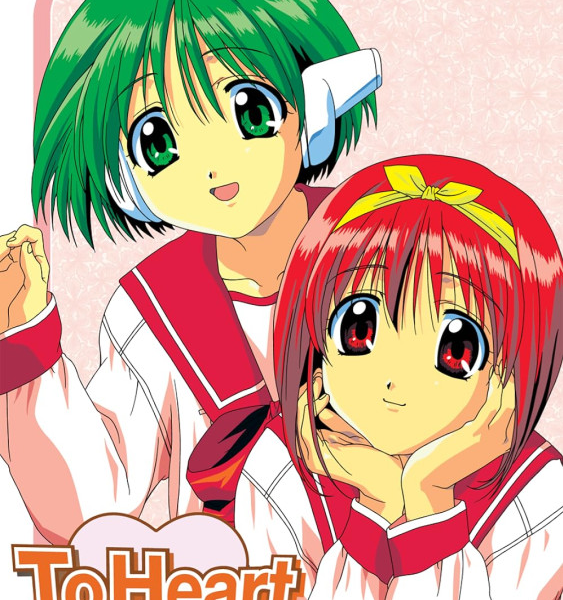
ToHeart is an interesting beast. It’s considered the second non-Hentai anime adaptation of a visual novel, only beaten out by the very first one, Nightwalker: Midnight Detective, which came out in the summer of 1998. The original game was an 18+ eroge and didn’t have as much of a marketing push as previous VN adaptations, but the 1999 anime would go on to be pretty popular, selling 10,000 copies in terms of home video sales, which was considered successful back then. It even managed to get an English dub and DVD release in the US a few years later, and even got a sequel series, ToHeart: Remember My Memories, though I’ve heard said sequel isn’t very good. I did watch the first episode of ToHeart on a whim years ago, but child me thought it was dreadfully boring and dropped it. My tastes have evolved quite a bit since then, and in light of the original game getting a remake that came out this year, albeit based on the all-ages version, I decided to go back and revisit it with fresh eyes. Man, child me was an idiot, because even if it’s not the most faithful adaptation of the game, ToHeart the anime is surprisingly good, and has aged a lot better than one would think.
For the most part, the anime is the same as the game, focusing on two high school students, Hiroyuki Fujita and his best friend Akari Kamigishi. They’ve been childhood friends their entire lives, and they spend every day going to school, hanging with friends, and going through the daily doldrums. Unlike the game, which has ten character routes to pursue and you have to go through them one at a time, the anime makes the very smart decision to have it be more of a character-of-the-week format, where Akari and Hiroyuki interact with the different heroines in every episode and help them with their problems. So don’t expect the anime to be a faithful adaptation of the game, because with it being 13 episodes, trying to cram all ten routes into that amount of time is absolutely impossible, and the creators seemed to realize this, which is why they made it more of an ensemble piece than anything, and any changes make sense when you watch the anime with this context. I mainly appreciate it because this approach allows characters besides Hiroyuki to have more to do besides fawn over him. For example, episode 7 has Akari meet and befriend Kotone, a lonely psychic whose powers cause misfortune to those around her, rather than having Hiroyuki be the one to approach her, which is a nice change because it gives Akari more to do besides stick around Hiroyuki all the time.
Yeah, because the anime decided to go its own direction and not try to adapt all the routes, the characters aren’t exactly the most well-developed. They pretty much stay the same throughout the show, and I can see why people would think they’re rather bland and uninteresting here. I personally don’t think so, as even if the characters don’t evolve throughout the series, I still found them fun to watch, and with the show’s more down-to-earth approach, I never found them to be too obnoxious besides Shiho, and she’s like that by design. I can’t really comment on their characterization beyond this because as of right now, I’ve only completed Akari’s route in the game and am still making my way through Rio’s route. I can at least say that everyone is pretty faithful to their game counterparts, and while Hiroyuki as a male lead isn’t the most memorable, I’ll gladly take him over certain…other VN protagonists. coughKouheiOriharacough
I should also warn people that ToHeart is a very deliberately slow paced show, the very definition of a slow burn. It wears its slice-of-life leanings proudly, conflicts are as down-to-earth and grounded in reality as humanly possible, even with stuff like robot girls and psychic powers thrown into the mix, nobody is screaming to the heavens and bawling their eyes out over every little problem (besides Shiho, but that’s par for the course for her even in the game), there’s no overarching plot, and it has absolutely no interest in being anything it isn’t. While many may find the slow, leisurely pace appealing and refreshing, especially compared to most modern anime, just as many won’t have that level of patience. This is about as slow paced as Kamichu, Princess Arete, and the 1979 Anne of Green Gables anime, so if you’re not a patient person and prefer constant high octane stimulation, you’re not gonna get any enjoyment out of this show. Granted, ToHeart being slow paced has its own issues, and not every episode is a home run. Seriously, did we really need an entire episode about the kids constantly talking in circles around each other about concert tickets and dragging it out for way longer than it needed to? Yeah, episode 2 is the only dud in this show, IMHO.
But what ToHeart lacks in flair and spectacle, I feel it makes up for with sheer atmosphere and ambience. The animation by itself, while not the most eyecatching and vibrant, focuses more on bringing the characters to life in a humanistic manner. The characters move in a way that every motion is conveyed as a full-body experience when the scene calls for it, and when properly framed, lit, and contextualized, the show can look absolutely gorgeous, no small feat for an anime released in 1999, and by the same company that worked on Pokemon, at that. The backgrounds are beautiful watercolor paintings that really make the scenery feel like it’s truly lived in, to which flowers must be given to the late great art director Shichiro Kobayashi. You may not know him by name, but anime fans have absolutely seen his background work before, as he’s worked on anime such as Angel’s Egg, the 90s Berserk anime, Revolutionary Girl Utena, Nurse Angel Ririka SOS, the anime version of Diary of Anne Frank (Yes, such a thing exists), Lupin III: The Castle of Cagliostro, Nobody’s Boy Remi, and a shit ton of other anime. The soundtrack is also an interesting point, using both traditional orchestral pieces and more modern (at the time) electronic synthesizer sounds. One instrument I found that’s used quite a bit here is the pan flute, which you don’t often hear in anime, and I really liked its usage here. It’s a shame the pan flute isn’t used more often in anime. I definitely appreciate the anime deciding to go with its own soundtrack rather than re-use music from the game, other than the opening theme song which I’m willing to forgive because Feeling Heart is still a nice little 90s pop song that’s easy on the ears.
So yeah, at its heart (Yes, the pun is absolutely intended), ToHeart is still an anime made solely to promote the visual novel, and does have the whole “If you wanna know more about these characters, you gotta play the game” vibe going for it. But I think ToHeart is still a good show even with that context in mind. Even if you haven’t played the game, I think the series by itself can still be enjoyed as a nice little sweet treat to relax to or wind down with after you’ve had a hard day at work. But for those who are fans of the game, I would recommend seeing this as more like a set of side stories taking place during the events of the game rather than a direct adaptation of the game. Or the anime equivalent of a fan disk, if you want to look at it from another angle. ToHeart may not exactly be an emotional rollercoaster or trailblazer, but for showing that anime adaptations of VNs don’t have to be exclusively low quality porn, and just being a nice, wholesome time, if a bit too idealistic for its own good, I think it’s worth checking out.
The post Guest Post: Unearthed Treasures with Firechick: ToHeart (1999) (78/100) appeared first on Star Crossed Anime.